|
. . .
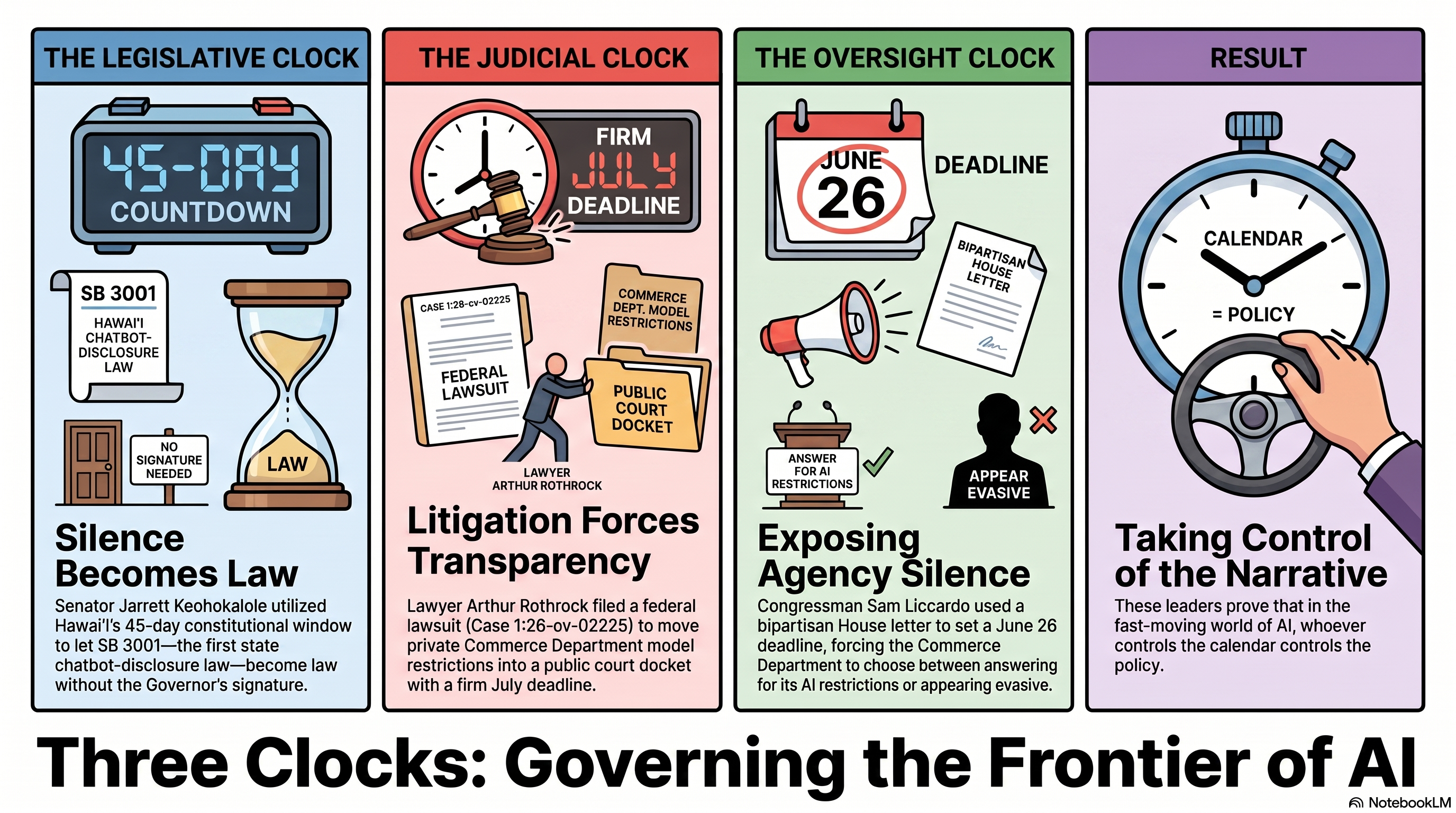
THE SENATOR WHO WON BY LETTING THE CLOCK RUN. Hawai'i's chatbot bill needed the Governor to sign it. The Governor said nothing. On June 25 Josh Green published his 2026 intent-to-veto list and named four bills. SB 3001 was not among them, and under Article III §16 of the state constitution the bill becomes law on July 15 without his signature.
|
|
Photo: Wikimedia Commons, CC BY 4.0
|
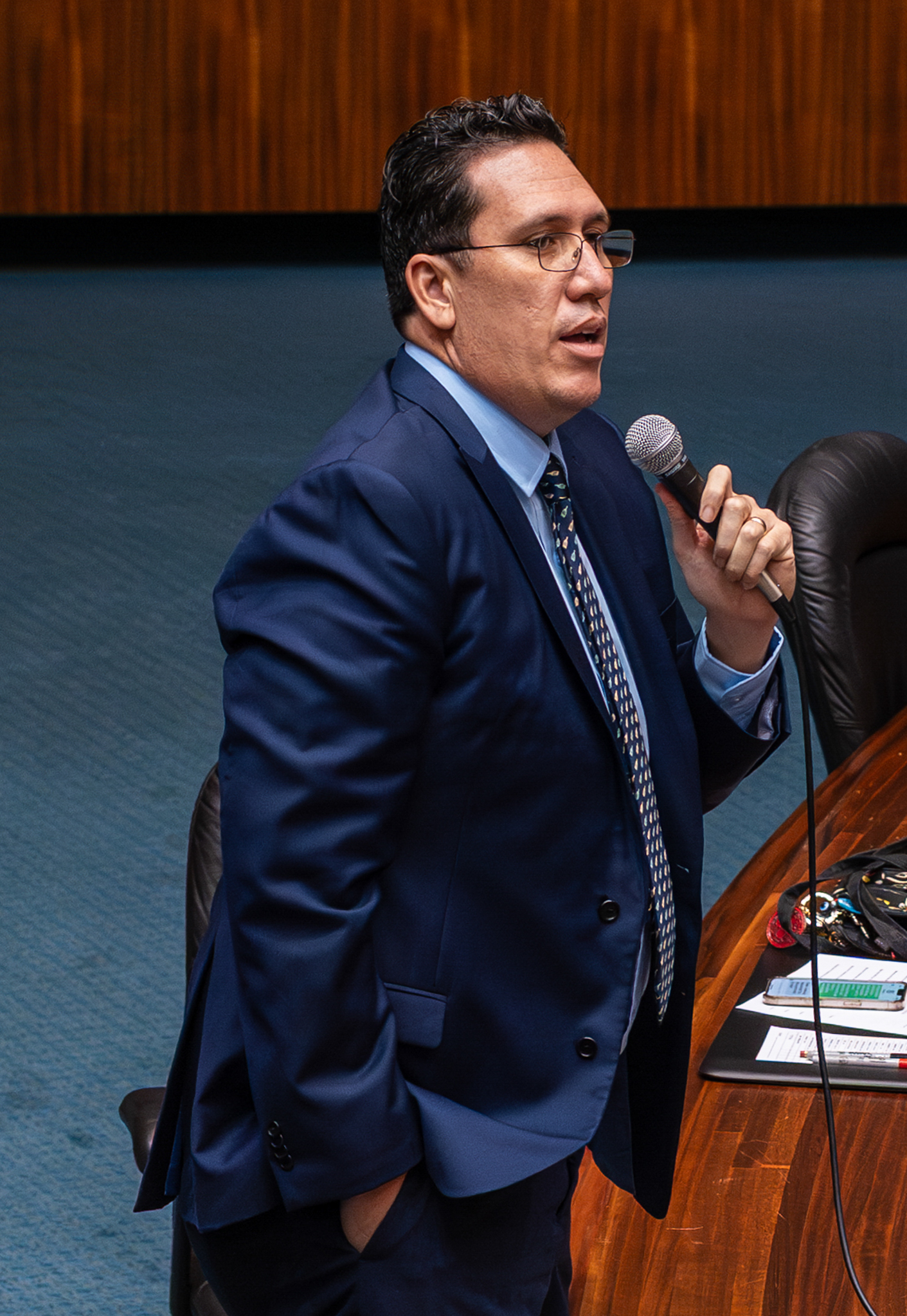
Jarrett Keohokalole is a state senator from the windward side of O'ahu. Seventh-generation Kane'ohe. Richardson Law, class of 2013. House in 2014, Senate in 2018, now Vice President of the Senate and chair of Commerce and Consumer Protection. He is also running for Congress, primary August 8.
In January he and Stanley Chang put SB 3001 in the hopper.
. . .
The bill is plain on its face. A conversational AI system that talks to a minor in Hawai'i must disclose, at least once an hour, that the user is not talking to a human. Operators report annually to the Department of Health Behavioral Health Administration starting January 1, 2028. Enforcement runs through the Office of Consumer Protection at DCCA as an unfair or deceptive practice.
Keohokalole built it to survive a lawsuit before one was filed. "We worked with the Attorney General's Office on language to make sure the bill was sufficiently clear and reduce the likelihood of legal challenges from AI operators," he told Hawaii News Now on June 21. NetChoice had already filed opposition testimony. The bill was drafted around the punch.
It moved fast. Senate Commerce and Consumer Protection cleared it February 11. Crossover to the House March 10. Conference Committee Report CCR95-26 filed April 29. Both chambers passed the conference draft May 6, and the bill was transmitted to Governor Green on May 8.
Then the clock he holds did the rest.
. . .
Article III §16 of the Hawai'i Constitution gives the Governor 45 days after sine die to act on bills passed near adjournment. To veto, he must give the legislature ten days' notice by proclamation and put the bill on a published intent-to-veto list. Any bill he does not name becomes law on day 45. Silence finishes the work.
Green published his list June 25. He named SB 2338, SB 2600, SB 3262, and HB 2344. SB 3001 was not on it. Under Article III §16 the veto window closed, and the bill becomes law July 15.
Kris Coffield ran the outside lane. The Imua Alliance executive director carried the bill in public testimony and in the press, and on June 21 told Hawaii News Now that "SB 3001 establishes clear protocols for companies in this space." Rep. Trish La Chica carried it on the House side. The Attorney General's office hardened the text. Keohokalole held the floor.
The braid line is hard to miss. The same week his state bill becomes law by gubernatorial silence, the senator is asking voters in HI-01 to send him to the body that has done nothing on the same question. The clock at home ran out in his favor. The clock in Washington has not started.
|
For Legislators: Write the bill to survive the lawsuit before the lawsuit. Coordinate with the Attorney General's office on the operative section text, frame enforcement under your state's UDAP statute, and you reduce the surface area NetChoice and its co-filers can attack.
For Counsel: Hawai'i's silence-becomes-law mechanism is a working channel for chatbot legislation when the Governor is unwilling to veto and unwilling to sign. Article III §16 closes the window on any bill not named in the published intent-to-veto proclamation. The unsigned bill is law on day 45.
Source: Hawai'i Senate Majority press release on legislative passage of SB 3001 CD1, https://www.hawaiisenatemajority.com/press-release/hawai%CA%BBi-state-legislature-passes-sb3001-cd1-the-artificial-intelligence-disclosure-and-safety-act
|
. . .
THE CUSTOMER WHO PUT COMMERCE ON A FEDERAL CALENDAR. On June 23, Arthur E. Rothrock filed a complaint in the District of Columbia that turned a Commerce Secretary's letter into a docket. Case 1:26-cv-02225. Judge Richard J. Leon presiding. The preliminary-injunction hearing is no earlier than the week of July 27. Day 6 today.

|
|
Photo: Velocity Incubator / Hopkins & Carley 2024
|
Rothrock is a California litigator before he is anything else. Santa Clara Law, class of 2016. Law Review. High Tech Law Journal. He kept his own firm, Rothrock Legal, and ran it alongside the company he built. He still does.
In 2024 he co-founded Legion LegalTech with Zihao Jiang and Xiaozhou Wang after Stanford's LLM x Law Hackathon. The product drafts complaints, motions, oppositions, discovery. The kind of paper a small California litigator used to bill eight hours to put on a desk. Ad Astra Law Group, a six-attorney firm in San Francisco, says it now takes two and a half. Legion runs on Anthropic's Fable 5 and Mythos 5.
On June 12 Commerce Secretary Howard Lutnick wrote Anthropic a letter under 15 C.F.R. § 744.22(b) and restricted both models for an "Annex A" list of parties no one outside Commerce has seen. Anthropic disabled access. The transparency page promised more in twenty-four hours. Sixteen days later it still says February.
Eleven days after the letter, Rothrock sued. The lawyer ran the play the lawyer knew.
. . .
The complaint names Trump, Lutnick, and Jeffrey I. Kessler at the Bureau of Industry and Security. It pleads APA, ECRA, IEEPA. It says the directive "exceeds every source of statutory authority on which it could conceivably rest." It says there is "no 'export' here to restrict." That last line is the theory Alasdair Phillips-Robins, a former senior Commerce policy adviser, posted to X on June 15 and Bloomberg printed on June 19. Rothrock put it on a docket four days later.
The harm clause is the one his customers will remember. "The harm to Legion is immediate, irreparable, and existential. The pace of frontier AI advancement is blistering, and competitive ground lost during a suspension cannot be regained after the fact." That is a small California firm telling a federal judge what a federal directive does to a payroll. Gregory L. Ewing and Diana Lyn Shutzer entered appearances for the plaintiff. The government has until July 14 to answer.
On Friday, three days before today, Lutnick sent a second letter. Not to Legion. To Tom Brown, Anthropic's Chief Compute Officer. It cleared Mythos 5 for "more than 100" companies and federal agencies on Annex A. Fable 5 stayed dark. The list has not been published. The authority has not been explained. The same Friday a House oversight letter to Commerce went unanswered, Lutnick wrote privately to the regulated company instead. The only forum where Commerce has to say something on the record is the one Rothrock opened.
Rothrock told Bloomberg what the case is really about. "Who's to say they can't do this any other time against another company, like OpenAI?" That is a litigator writing the precedent on the front end. A directive that touches one model touches the theory. A theory tested in open court does not stay private.
|
For Counsel: Legion LegalTech Corp v. United States is 1:26-cv-02225, D.D.C., before Judge Leon. Government response due July 14, plaintiff reply July 21, PI hearing not earlier than the week of July 27. Watch whether the Phillips-Robins "no export" frame survives the administrative-record briefing under 5 U.S.C. § 706.
For Founders: The license-by-letter regime moves around your company until a customer puts it on a calendar. Rothrock did not wait for a coalition. He walked the statute, found the door, and filed. If Commerce can restrict your dependency by letter, the only forum that forces a written answer is the one you open yourself.
Source: Legion LegalTech Corp v. United States, D.D.C. 1:26-cv-02225, complaint filed 2026-06-23. https://www.courtlistener.com/docket/73520460/legion-legaltech-corp-v-united-states-of-america/
|
. . .
THE MAYOR WHO LEARNED A HOUSE LETTER IS NOT A CITY ORDER. A freshman House member can ask a Cabinet Secretary a question. He cannot make him answer. On June 18, Sam Liccardo sent Howard Lutnick four names, eight questions, and a deadline. On Friday the deadline expired. Commerce wrote to the regulated company instead.
|
|
Photo: U.S. House of Representatives, public domain
|
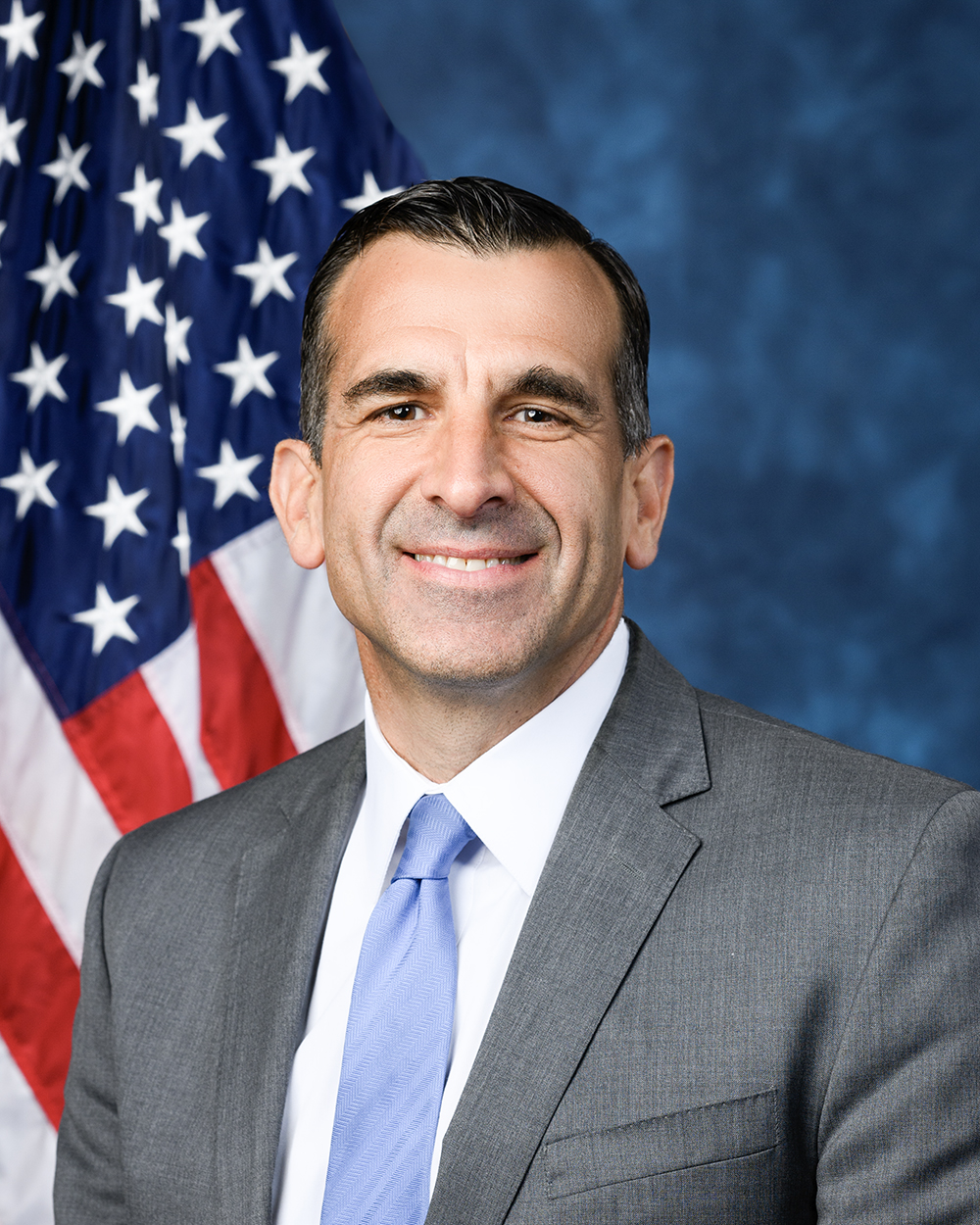
Liccardo is the freshman from California's 16th district, the Silicon Valley seat that runs from San Jose through Palo Alto to Half Moon Bay. Before that he was the 65th Mayor of San Jose, two terms, a city of more than a million people, the kind of job where you sign an order and the lights come on. Before that he was a federal prosecutor and a Santa Clara County deputy DA.
He was sworn in to the House in January 2025. He sits on Financial Services, on the subcommittee for Digital Assets, FinTech, and Artificial Intelligence. The subcommittee is the one with jurisdiction. That is the chair he chose.
On June 12 the Bureau of Industry and Security restricted access to Anthropic's Fable 5 and Mythos 5 frontier models. The directive arrived as a private letter from Secretary Lutnick to Anthropic CEO Dario Amodei. No Federal Register notice, no public rule, no published statutory citation. Bloomberg reported the action the same week.
. . .
On June 18, Liccardo wrote back to Lutnick. He was the lead signatory. His three co-signers were Jay Obernolte, Republican of CA-23 and the only AI-graduate-degree-holder in the House; Ted Lieu, Democrat of CA-36, a computer-science degree and a decade of AI policy work; and Scott Franklin, Republican of FL-18, Financial Services.
Two Democrats, two Republicans. Two Californians whose districts touch the frontier-model labs, and two members who do not represent them at all. The bipartisan composition was the point.
The letter walked the document. It asked which legal authorities Commerce invoked and what the statutory basis was under the Export Control Reform Act of 2018. It asked whether the directive ran through the "is informed" mechanism under EAR section 744.22(b), the procedural rail BIS uses when it tells a specific exporter that a specific end use is now licensable. It asked what jailbreak risk evaluation triggered the action, and whether the National Security Council, State, Defense, and ODNI had been consulted.
It asked what criteria would govern restoring access, and what evidentiary threshold the agency was applying. Eight questions.
The cover line was the one that travels. "While this action concerned a single AI model, it appears to represent a significant new application of export control authorities to advanced AI systems and therefore raises important questions for the broader U.S. AI ecosystem, American competitiveness, and the future development and deployment of frontier AI technologies."
The members asked for a reply by Friday, June 26.
Friday came and went with no reply and no public extension request. The same Friday morning, Lutnick wrote a separate private letter, this time to Anthropic's chief compute officer Tom Brown. The Secretary determined that appropriate safeguards were in place and that a license would no longer be required to export Mythos 5 to more than 100 listed U.S. institutions. Semafor reported it the next day.
By Sunday, the bipartisan House group has not been answered on the record.
A House letter is not a subpoena. It carries no compulsion. What it carries is a political clock, a deadline the agency can let pass and absorb the press cycle, or answer in writing and be quoted. Letting the clock run out is not procedural failure. It is the mechanism.
By writing to Tom Brown on the same day the House deadline expired, Commerce showed it had time on Friday for the regulated company. It did not have time on Friday for four members of Congress asking why the law was used. That contrast is the document Liccardo now holds.
The former mayor of San Jose used to sign orders. The freshman from CA-16 sent a letter. The deadline expired. He is still holding the clock.
|
For Legislators: A signed-on letter from your office is the smallest oversight instrument you have, but it is the one that becomes a public record the day the deadline lapses. Bipartisan signatures from the subcommittee of jurisdiction make the lapse harder to ignore in the press cycle that follows. Send the letter, post the deadline, and treat the silence itself as the next story.
For Press: Two letters expired and arrived on the same Friday. One was an unanswered bipartisan House demand for the legal basis of a major export-control action. The other was the Secretary writing to the regulated company to grant a partial unwind. The same agency on the same day made room for one and not the other. That is the story to print.
Source: Liccardo press release announcing the bipartisan letter to Commerce on frontier AI export controls, https://liccardo.house.gov/media/press-releases/bipartisan-members-congress-seek-transparency-frontier-ai-export-controls
|
|