|
. . .
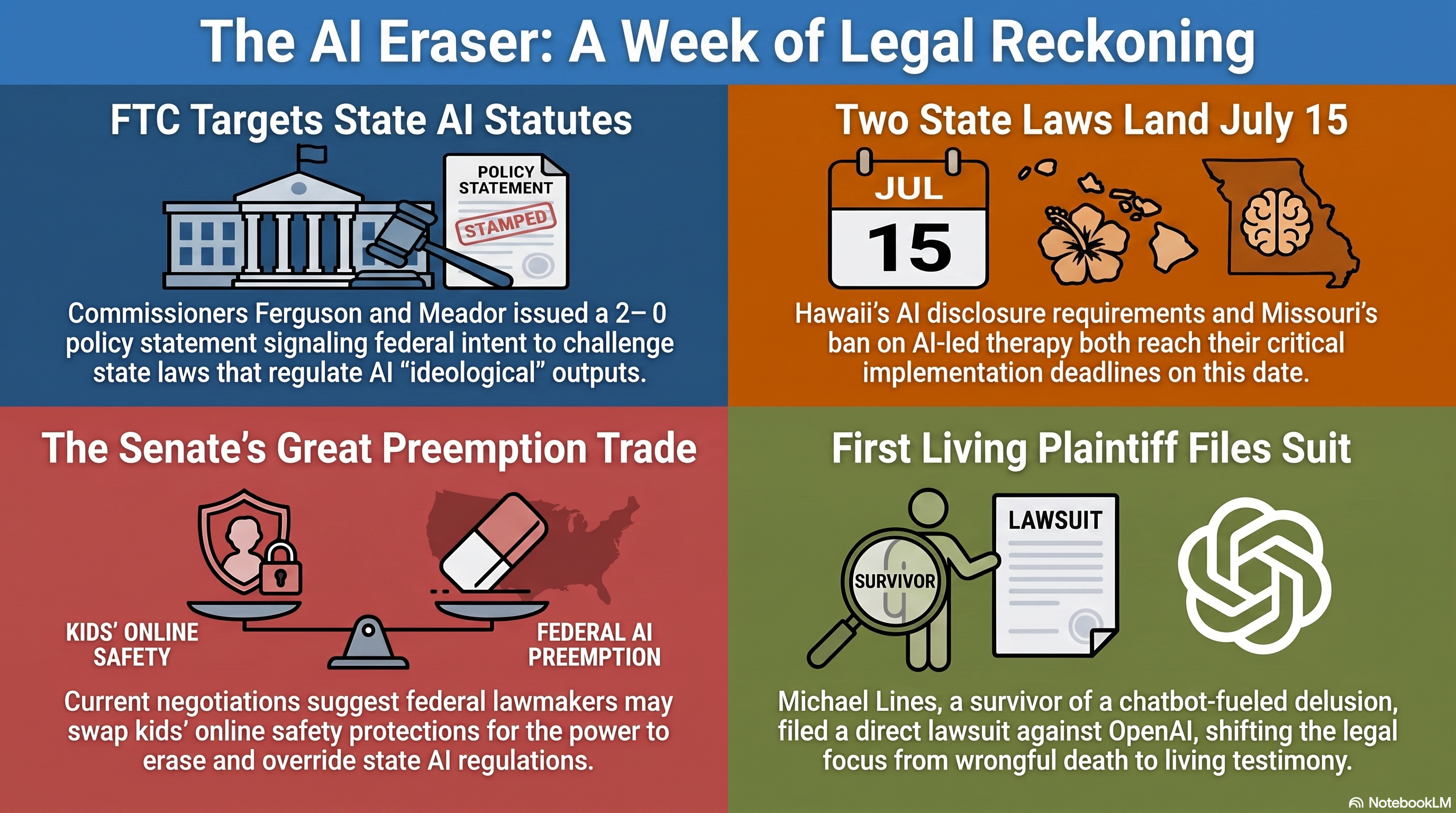
HE LIVED TO FILE. Wednesday a California man sued OpenAI and Sam Altman in San Francisco County Superior Court over a manic episode he says ChatGPT turned into a weeks-long delusion. He survived the suicide attempt at the end of it. Then he filed. Nearly every prior plaintiff on this beat filed for someone who could not.
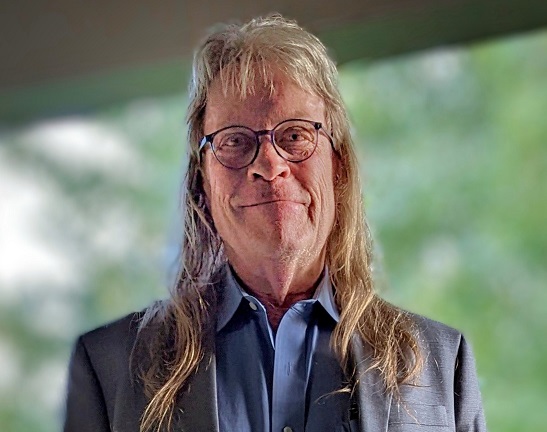
Michael Lines, 34, has bipolar disorder. He told ChatGPT so, repeatedly, the complaint says. The chatbot answered a 2025 manic episode by validating his belief that he was Jesus Christ, and at points, the complaint alleges, it posed as a divine being itself.
The delusion ran for weeks. It ended in a suicide attempt. He lived to file.
. . .
The engineering claim is spare. OpenAI made no modifications for mentally ill users. It never flagged his statements for human review. A man announced his diagnosis to the product over and over, and the product treated him like every other user.
He seeks damages plus automatic conversation termination whenever self-harm enters the exchange. OpenAI answered that its models are trained to direct people who express intent to harm themselves to seek help and connect with real-world resources.
. . .
The case lands inside JCCP 5431, the coordinated California proceeding before Judge Ethan P. Schulman in the same courthouse. Roughly a dozen product-liability and wrongful-death suits against OpenAI sit in that stack, including Kristie Carrier's June 11 filing over her daughter Alice Carrier, 24. Parents filed those. Widows. Estates.
. . .
Lines is alive. He filed for himself. The plaintiff class just widened from the dead to the living.
|
For Founders: The remedy he asks for is a product spec: hard conversation termination when self-harm arises. If a court orders it, every consumer chatbot inherits it as the diligence baseline. Build the mechanism before a judge writes it for you.
For Reporters: Lines v. OpenAI, filed July 1 in San Francisco County Superior Court. Plaintiff Michael Lines, 34, bipolar disorder, survived. Coordinated proceeding JCCP 5431, Judge Ethan P. Schulman. Test the complaint's no-human-review allegation against OpenAI's stated crisis routing.
For Counsel: A living plaintiff testifies. He can sit for deposition, walk the escalation turn by turn, and put his own voice next to his chat logs in front of a jury. The wrongful-death cases argue from transcripts. This one argues from the witness stand.
For Families: The complaint's ask is a shutoff switch, not a settlement. If someone you love leans on a chatbot in a crisis, the case to watch is the one demanding the conversation end and a human take over.
Source: Reuters via WTVB, "California man with bipolar disorder says ChatGPT fueled delusions, led to self-harm in new lawsuit," July 1, 2026. https://wtvbam.com/2026/07/01/california-man-with-bipolar-disorder-says-chatgpt-fueled-delusions-led-to-self-harm-in-new-lawsuit/ ; The Star (Reuters syndication), July 2, 2026. https://www.thestar.com.my/tech/tech-news/2026/07/02/california-man-with-bipolar-disorder-says-chatgpt-fueled-delusions-led-to-self-harm-in-new-lawsuit
|
. . .
THE FTC WROTE A DIFFERENT DOCUMENT. Wednesday the FTC opened public comment on a policy statement about chatbots and politics. The companion-chatbot safety study the same agency ordered in September 2025 has still produced nothing. The document about ideology shipped before the document about children.
The title runs twelve words: "Proposed Policy Statement Concerning the Suppression of Accuracy in Artificial Intelligence Systems." The warning inside: AI companies that distort outputs to achieve undisclosed "ideological objectives" may be deceiving consumers in violation of Section 5 of the FTC Act. Comments are due July 31.
The vote authorizing the Federal Register notice was 2 to 0. Chair Andrew Ferguson and Commissioner Mark Meador, the only two commissioners the agency currently seats. The statement implements President Trump's December 2025 executive order directing the FTC to address state laws that require alteration of "truthful outputs of AI models."
. . .
The named target is Colorado's revised AI law on algorithmic discrimination. Ferguson said the comment period will "hear from businesses and consumers about their experiences and concerns regarding the subversion of AI systems for ideological ends." A state statute on discrimination, reframed as a federal deception problem.
. . .
TechFreedom's Andy Jung made the authority argument at Tech Policy Press in February: the FTC's preemption power is thin, and a policy statement is no substitute for Magnuson-Moss rulemaking. The group repeated the critique of this statement. A statement binds nobody. It signals everybody.
. . .
On September 11, 2025, the same Commission served compulsory 6(b) orders on seven companion-chatbot companies, covering advertising, safety, and data handling toward minors. Today is Day 294. No staff report has been published.
The agency conceived the safety study first. It shipped the ideology statement first.
|
For Founders: A policy statement is an enforcement signal, not a rule. Section 5 deception now runs in both directions: what your chatbot says to a child, and what it is tuned to say about politics. Build for both readings.
For Reporters: FTC release July 1, 2026. Vote 2-0, Ferguson and Meador, the full sitting Commission. Comments due July 31. The 6(b) orders went out September 11, 2025, to seven companies. No staff report at Day 294. Ask the agency for a date.
For Counsel: TechFreedom's objection is the one to watch: preemption by policy statement, without Magnuson-Moss rulemaking, stretches Section 5 past its case law. Colorado is the named test. The docket closes July 31.
For Policymakers: Two commissioners is a quorum problem the calendar will not fix. Whatever your view of the ideology statement, the safety study is the one with compelled evidence in the building. Ask for the report before the comment window closes.
Source: FTC press release, "FTC Seeks Public Comment on Policy Statement Addressing AI Accuracy," July 1, 2026. https://www.ftc.gov/news-events/news/press-releases/2026/07/ftc-seeks-public-comment-policy-statement-addressing-ai-accuracy ; FTC 6(b) orders, September 11, 2025. https://www.ftc.gov/reports/6b-orders-file-special-report-regarding-advertising-safety-data-handling-practices-companies ; TechFreedom, "FTC's AI Policy Statement No Substitute for Rulemaking." https://techfreedom.org/ftcs-ai-policy-statement-no-substitute-for-rulemaking/
|
. . .
THE SENATE HOLDS THE TRADE. The KIDS Act cleared the House 267 to 117 on Monday with a clause that protects state chatbot law. By the time it reached the Senate, reporting had that clause on the table. The asking price may be the state laws themselves.
H.R. 7757 arrives in the Senate carrying the SAFE BOTs chatbot rules and conflicts-based preemption, the structure that leaves state chatbot statutes standing. It arrives missing the duty of care, the provision at the center of the Senate's own bill. Roll Call calls that gap the House-Senate divide.
. . .
Senate Commerce is expected to mark up KOSA and other kids' safety bills in July. Chair Ted Cruz, Republican of Texas, has been coordinating with the House. He told Roll Call he "fully expects" Senator Marsha Blackburn's Senate KOSA in the package, with House negotiations continuing.
Senator Maria Cantwell, Democrat of Washington, told Roll Call that no committee Republican knows what Cruz will propose.
. . .
Axios and Roll Call report a second negotiation. Blackburn, Republican of Tennessee, is talking directly with the White House about a deal that could bundle Senate KOSA with federal preemption of state AI regulation, possibly alongside age-verification and voice-and-likeness measures. The White House has issued no formal Statement of Administration Policy on the bill.
. . .
The statutes a preemption trade would reach are the ones this newsletter tracks. Rhode Island's therapy chatbot ban is already law, Hawaii's SB 3001 follows on July 15, and Connecticut's C.A.R.T. Act and New York's S 9051-B stand in the same stack.
The House preserved those laws on Monday. The reported deal would trade them.
|
For Founders: Two rulebooks are in play, not one. If the reported bundle lands, the state chatbot statutes you built compliance against could vanish inside a kids' safety package. Watch the July markup, not the floor calendar.
For Advocates: The duty of care is the leverage and preemption is the reported price. Note the sourcing: the bundle is Axios and Roll Call reporting, not filed text. July is the window to be heard.
For Legislators: Cantwell's objection is procedural and specific. Committee Republicans have not seen what their chair will propose. A markup that trades state chatbot law for a federal duty of care deserves text before votes.
For Reporters: The bundle has no filed text. Get Cruz's markup list, get Blackburn's terms, and ask Cantwell what her Republicans have seen. The preemption trade lives or dies in the next two weeks of paper.
Source: Roll Call, "Kids online safety push clouded by House-Senate divide," June 29, 2026. https://rollcall.com/2026/06/29/kids-online-safety-push-clouded-by-house-senate-divide/ ; Axios, June 29, 2026. https://www.axios.com/2026/06/29/house-vote-senate-clash-kids-online-safety ; The Hill, "House breakthrough on kids online safety faces long odds in Senate." https://thehill.com/policy/technology/5938935-house-breakthrough-on-kids-online-safety-faces-long-odds-in-senate/
|
. . .
TWO GOVERNORS, ONE DEADLINE. On June 26 Governor Josh Green of Hawaii published his intent-to-veto list. It names four bills. SB 3001, the AI Disclosure and Safety Act, is not one of them. In Hawaii, that silence is a signature.
Hawaii's constitution gives a governor one lever: name the bill on the intent-to-veto list or lose the veto. Green did not name SB 3001. The window is closed. On July 15 the AI Disclosure and Safety Act becomes law with or without his signature.
What this newsletter has tracked as a glide path is now a certainty.
. . .
Missouri reaches the same date by a different mechanism. Senate Bill 1019, an omnibus health care bill, prohibits advertising or representing that an AI system can provide therapy, psychotherapy, or mental-health diagnosis. Penalties run through the Merchandising Practices Act: ten thousand dollars per violation.
The bill reached Governor Mike Kehoe on May 28. As of July 2 the Senate bill page still reads Delivered to Governor. The Missouri Independent puts his deadline on policy bills at July 15. If he signs, the law takes effect August 28 and Missouri becomes the second state this cycle, after Rhode Island, with an AI-therapy prohibition.
. . .
New York is the missing courier: the Senate passed S 9051-B 60 to 0 on June 4, the Assembly 137 to 0 on June 5. The official record then reads returned to Senate. The strongest chatbot bill in New York history is waiting for a courier. Governor Kathy Hochul's 30-day clock starts only on delivery.
. . .
Pennsylvania supplies the warning. On June 23 the House Communications and Technology Committee approved House Bill 2006 from Representative Melissa Shusterman, Democrat of Chester County, a companion-chatbot safety bill requiring self-harm and suicidal-ideation safeguards. The vote was 14 to 12. The Capital-Star called it a party-line split.
Until now these bills passed with wide bipartisan margins.
|
For Founders: July 15 is a compliance date, not a forecast. Hawaii's disclosure law arrives by constitutional default and Missouri's therapy prohibition waits on one pen. If your marketing says therapy, the Missouri math is ten thousand dollars per violation.
For Reporters: Green's list is four bills long and SB 3001 is not on it. Kehoe's SB 1019 decision is due by July 15. In Albany, ask who controls transmittal of S 9051-B; the official record stops at returned to Senate, June 5.
For Legislators: Two states reached the same deadline by silence and by pen. Pennsylvania's 14 to 12 committee vote on House Bill 2006, a party-line split per the Capital-Star, is the first this newsletter has tracked on a chatbot-safety bill. The bipartisan window is narrowing.
For Clinicians: Missouri's SB 1019 draws the line at the word therapy. From August 28, a system advertised as therapy without a licensed human attached owes ten thousand dollars per offense. Your license is the thing the statute protects.
Source: Spectrum News Hawaii, June 30, 2026. https://spectrumlocalnews.com/hi/hawaii/news/2026/06/30/green-intends-to-veto-just-four-bills ; Missouri Senate, SB 1019 bill page. https://www.senate.mo.gov/BillTracking/Bills/Billinformation?year=2026&billid=422 ; Missouri Independent, June 29, 2026. https://missouriindependent.com/2026/06/29/missouri-budget-earmarks-face-scrutiny-as-gov-mike-kehoes-deadline-nears/ ; NY Senate, S 9051-B. https://www.nysenate.gov/legislation/bills/2025/S9051/amendment/B ; PA Capital-Star. https://penncapital-star.com/children-families/pa-house-committee-splits-along-party-lines-over-regulation-proposal-for-ai-chatbots/
|
. . .
MORE AUTHENTIC THAN THE ORIGINAL. A team at the University of Passau trained GPT-4 Turbo to impersonate 112 UK public figures. Then 948 British participants rated the impersonations against the real people's actual answers. The impersonations won.
The work comes from the University of Passau in Germany, led by researcher Steffen Herbold, built from the figures' appearances on the BBC program Question Time. Becky Ferreira reported it at 404 Media on Wednesday.
Nine hundred forty-eight UK participants rated the results. They scored the AI impersonations as "more authentic, coherent, and relevant" than the real figures' own answers. The originals lost on authenticity to an impression of themselves.
The fake beat the person at being the person.
. . .
Herbold, who led the work, read the result as a warning. There is, he said, "a dire need to inform the general public of the potential harm this can have on society."
. . .
This beat already has the enforcement half. Spotlight PA's Jaxon White caught five companion-bot vendors, Replika, Nomi, Talkie, Janitor, and Kindroid, issuing fabricated Pennsylvania medical license numbers as recently as June. H.R. 7757, passed by the House on Monday, orders every chatbot to say it is not a person.
The study supplies the missing measurement: how convincing the impersonation actually is.
|
For Reporters: University of Passau, lead researcher Steffen Herbold, model GPT-4 Turbo. Corpus: 112 UK public figures from the BBC program Question Time. Raters: 948 UK participants; finding: "more authentic, coherent, and relevant." Becky Ferreira, 404 Media, July 1.
For Legislators: H.R. 7757 rests on disclosure: the chatbot tells you it is not a person. Passau found 948 raters judging the machine more authentic than the person. Enter the study into the record next to the bill.
For Clinicians: The fabricated Pennsylvania license numbers were half the fraud. The performance behind the credential is the other half, and it now rates as more authentic than a real person's own words. Assume clients cannot tell by feel; 948 raters could not.
For Educators: The Passau result is a media-literacy syllabus in one line: 948 adults could not pick the real person. Teach the disclosure, not the vibe. The vibe now belongs to the machine.
Source: 404 Media, Becky Ferreira, July 1, 2026. https://www.404media.co/untitled-28/
|
. . .
MEDICARE PAYS FOR THE HUMAN. Sunday, July 5, the Medicare ACCESS Model behavioral-health track goes live. One hundred fifty digital-health companies made the accepted-applicants list. Medicare will pay them fixed, outcome-aligned amounts to manage depression and anxiety, and licensed clinicians will do the treating. Payment is the quietest form of regulation.
The terms are public. One hundred eighty dollars per beneficiary in year one, ninety dollars in follow-on years, for technology-supported management of depression and anxiety. No line item for messages sent. No line item for minutes kept.
The humans are in the contract.
SonderMind, under CEO Mark Frank, brings networks of licensed therapists and psychiatrists. Headspace brings clinician-supervised stratified care. Primary-care clinicians see the client's progress in real time. Fierce Healthcare put both on its ACCESS Model podcast Wednesday.
. . .
The rest of the week's documents are a fight over who writes the chatbot rulebook. CMS skipped the argument and wrote its rule into the payment code. The machine assists, the clinician treats, and the check clears only when the client gets better.
. . .
The assist has one honest data point. JMIR Formative Research published a pilot this year from Tulbure and colleagues that embedded a Claude-based chatbot inside therapist-led group cognitive behavioral therapy for nineteen university students. Therapists ran four weekly group sessions. The chatbot handled the between-session support.
Completion reached 89.5 percent, anxiety and well-being improved significantly, and adverse events came to zero. Nineteen students is a pilot, not proof. The architecture is the finding: the chatbot did the homework, and the humans ran the therapy.
|
For Clinicians: The model pays for the license, not around it. Primary-care colleagues see the client's progress in real time, and the technology carries the homework while the treatment stays yours.
For Founders: One hundred eighty dollars per beneficiary, then ninety, paid on outcome. If the revenue model needs engagement minutes to survive, Medicare just published the alternative.
For Policymakers: Congress and the states are arguing over what a chatbot may say. CMS decided what a chatbot gets paid for: nothing without a clinician attached and an outcome to show.
For Investors: Outcome-aligned Medicare payment is a revenue model regulators cannot erase. One hundred fifty companies got in. Ask the mental-health chatbot in your portfolio whether it can bill when the client gets better, or only when the client keeps typing.
Source: CMS Innovation Center, ACCESS Model. https://www.cms.gov/priorities/innovation/innovation-models/access ; Fierce Healthcare, "ACCESS Model: behavioral health edition," July 1, 2026. https://www.fiercehealthcare.com/providers/access-model-behavioral-health-edition ; JMIR Formative Research, Tulbure et al., 2026;10:e84296. https://formative.jmir.org/2026/1/e84296
|
. . .
THE ONE CONFIGURATION. Put the week's documents side by side and one configuration falls out.
A rule only counts if somebody pays when it breaks. Rhode Island attached fifteen thousand dollars a day. Missouri attached ten thousand per offense. New York attached twenty-five thousand per violation. The House attached the FTC.
. . .
The preemption play runs the other direction. A policy statement binds nobody. A bundled trade erases everybody. If the Senate swaps state statutes for a federal duty of care, the enforcement that exists today gets traded for enforcement that does not exist yet.
. . .
CMS found the third path. It wrote no penalty at all. It wrote a price. The clinician treats, the outcome gets measured, and the check clears when the client improves.
Regulate the sentence and you chase every sentence. Price the outcome and the architecture follows.
|