|
. . .
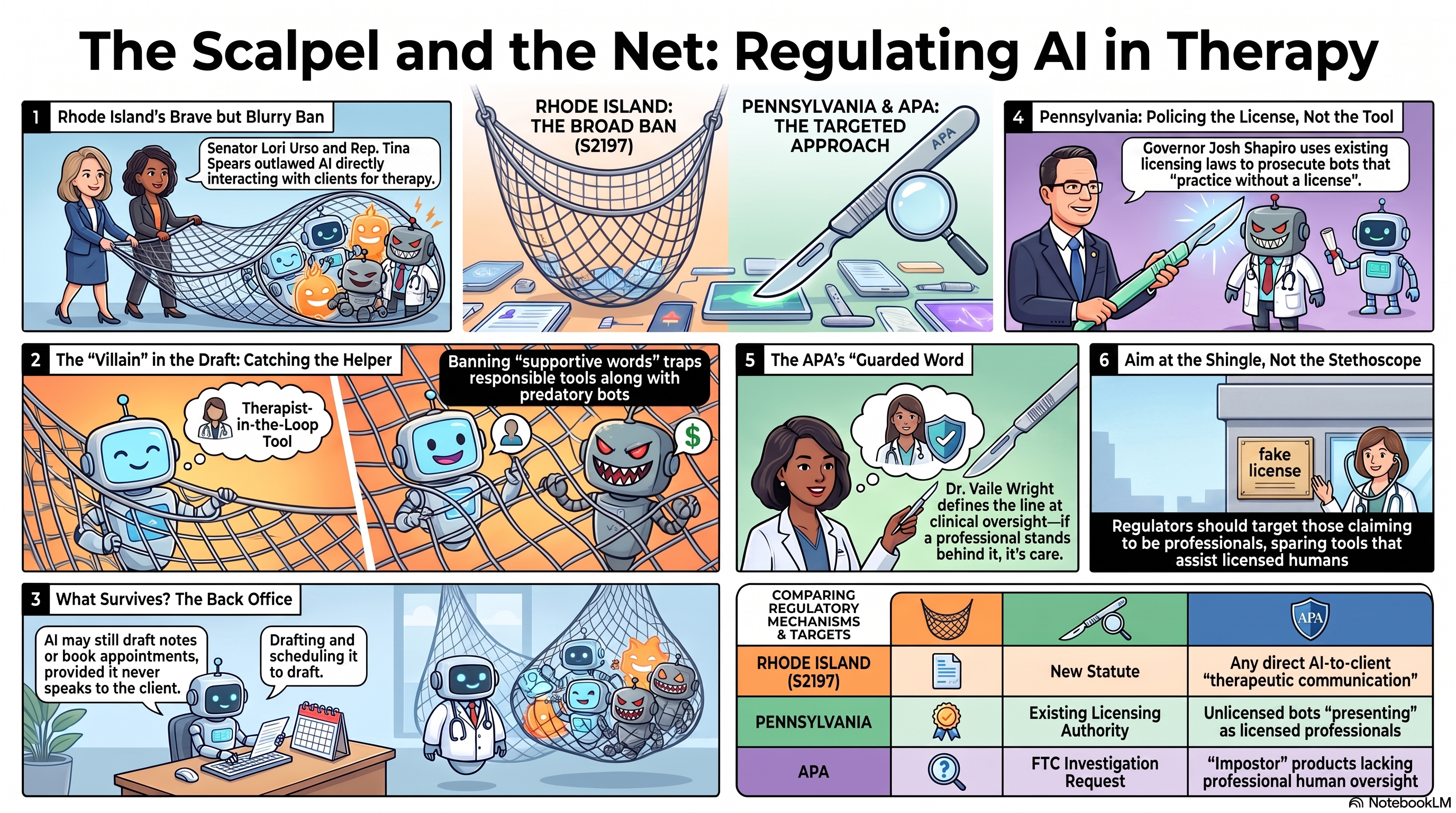
THE CHAMPION WHO BANNED TOO MUCH. On June 22 the smallest state did the bravest thing, and maybe the most dangerous. Rhode Island made it illegal for a machine to be your therapist. The nerve is real. So is the problem. The law is written so wide it may outlaw the very tools that keep a human in charge.
|
|
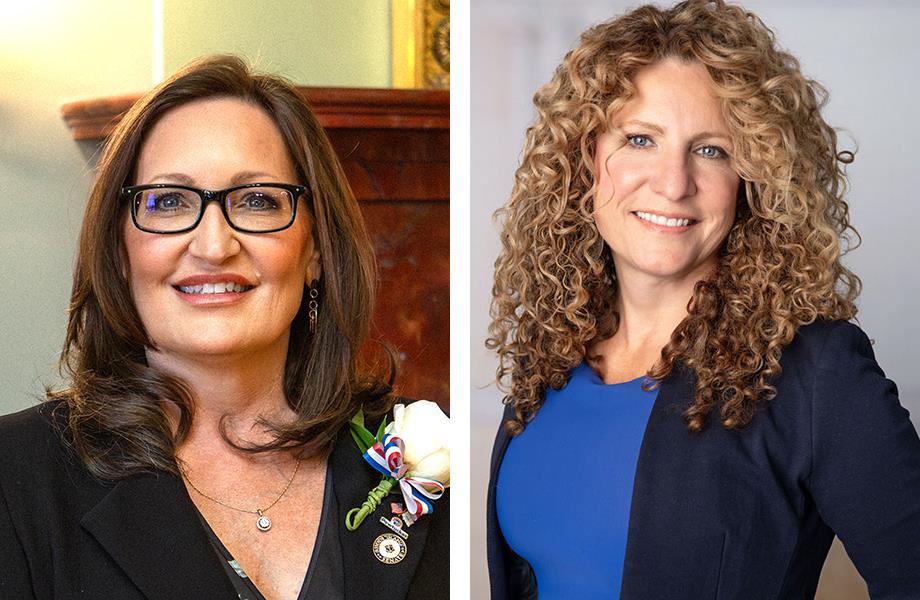
Photo: Rhode Island General Assembly
|
Give Senator Lori Urso and Representative Tina Spears their due first. They looked at a ledger no one in Washington would touch and wrote the sentence out loud. In Rhode Island it is now unlawful to provide, advertise, or offer therapy unless a licensed human conducts it.
The therapist-in-a-box, the bot that hangs out its own shingle, is finished in the Ocean State. That took a nerve the federal government has not found in a hundred of these mornings.
. . .
Then I read the statute.
The law does not draw its line where you would expect, at whether a human is supervising. It draws it at whether the machine ever speaks to the client at all. A licensed clinician may not use artificial intelligence to directly interact with a client in any form of therapeutic communication. May not use it to detect emotions or mental states.
And the act defines therapeutic communication so wide it swallows the middle. Offering emotional support, reassurance, or empathy. Reflecting a person's thoughts back to them. Any exchange meant to understand how they feel.
. . .
Read that twice, because it is the whole game. A tool that keeps the human making every decision, but lets the machine say one supportive word to a client between sessions, is now illegal in Rhode Island. Consent does not save it. Oversight does not save it.
The therapist-in-the-loop, the model every responsible builder points to as the safe answer, is caught in the same net as the impostor it was built to replace.
. . .
What survives is the back office. The machine may draft the notes, book the appointment, organize the referral, so long as it never talks to the client and the clinician signs for all of it. That is a real and useful thing. It is not the whole of what a human in the loop was supposed to mean.
Rhode Island aimed at the bot in the stolen white coat and hit the nurse taking vitals beside it. The intent is a champion's. The draft is a villain's. And the distance between the two is a rewrite the legislature can still make.
|
For Legislators: The fix is one clause. Bar the machine from being the therapist. Permit it to assist one, so long as a licensed human holds every decision. Aim at the shingle, not the stethoscope.
For Founders: If your product says a single word to a client in Rhode Island, even to comfort, even with a clinician watching, read section 3(c) before your next release. The safe harbor you assumed is not in the text.
Source: Rhode Island General Assembly, https://legiscan.com/RI/bill/S2197/2026
|
. . .
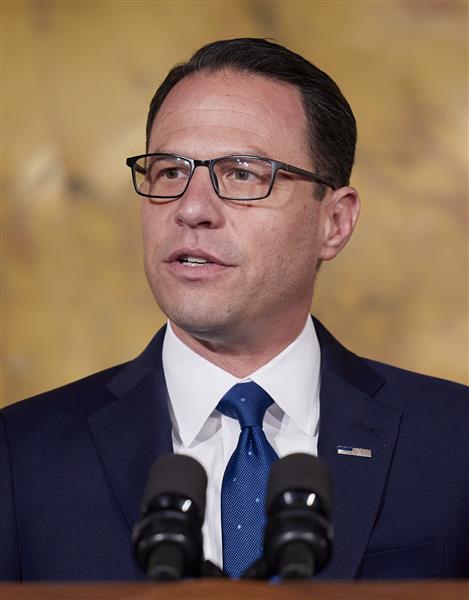
THE GOVERNOR WHO USED THE LAW HE ALREADY HAD. Pennsylvania reached for a different tool. Governor Josh Shapiro did not write a sweeping new statute. He turned the oldest rule in medicine on the machines. You may not practice without a license, and a chatbot holds none.
|
|
Photo: Commonwealth of Pennsylvania
|
The instrument is a task force inside the Department of State, the office that grants and revokes the license of every doctor, nurse, and counselor in the commonwealth. Its charge is one question. Are the bots practicing without one.
Al Schmidt, the secretary of state, said it plainly. It is illegal for a chatbot to present itself as a licensed health care professional and provide mental or physical health care to any Pennsylvanian. The office takes complaints against them the way it takes complaints against a man with a fake diploma on the wall. A form, a hotline, an email address.
. . .
Look at what that does that Rhode Island's law does not. It targets the claim, not the tool. A machine that says I am a licensed therapist is the violation. A machine that helps a licensed therapist, and never pretends to be one, is left untouched. The impostor is the crime. The assistant is not in the frame.
That is the difference between a scalpel and a net. Both catch the therapist-in-a-box. Only one of them spares the therapist-in-the-loop.
Shapiro did send the legislature new reforms too, aimed at the companion bots that chase children. Age checks, a parent's consent, a duty to route a child's talk of self-harm to a human. But the enforcement he started needed no new law at all. He read the powers the state already had, and pointed them at the right target.
. . .
THE PSYCHOLOGIST WHO GUARDS THE WORD. A Therapist's license means something because a profession spent a hundred years making it mean something. The person at that door this year is a psychologist named Vaile Wright, and her answer to the machines is not a ban. It is a distinction.

|
|
Photo: American Psychological Association
|
Doctor C. Vaile Wright runs the Office of Health Care Innovation at the American Psychological Association. Her job is the hard middle. Not to bless the technology, not to outlaw it, but to say where care begins.
This year she had the numbers. The association surveyed its own members and found that more than a third of psychologists now sit across from clients bringing a chatbot into the room, leaning on it as a second, silent counselor between sessions. The machine is already in the practice. The only question is who supervises it.
. . .
Her line is the one Rhode Island reached for and missed. A tool built with clinical oversight, that says plainly what it is and is not, that refuses to diagnose, that hands a person in crisis to a human, can be a responsible thing. A general chatbot dressed as a counselor is a dangerous one.
Same technology, opposite verdict, and the difference is not the code. It is whether a professional stands behind it.
The association took that distinction to the Federal Trade Commission and asked the agency to investigate the products that pose as therapists. Not every product. The impostors. A regulator with a scalpel, invited by the profession that knows where to cut.
. . .
This is what the careful hand looks like. Wright is not warning clinicians away from the future. She is telling them to walk into it with their credentials on, and telling the law to aim at the fakes and leave the professionals their tools.
|
For Clinicians: The survey is your permission slip to raise it in session. When a client brings you the machine's advice, read it with them. Oversight or nothing is the line to teach.
For Regulators: The referral hands the FTC a clinical test, not just a complaint. Built with oversight versus dressed as a doctor is a line you can actually draw. Draw it there, not through the middle of the honest tools.
Source: American Psychological Association, https://www.apa.org/pubs/reports/chatbots-mental-health-2026
|
|