|
. . .
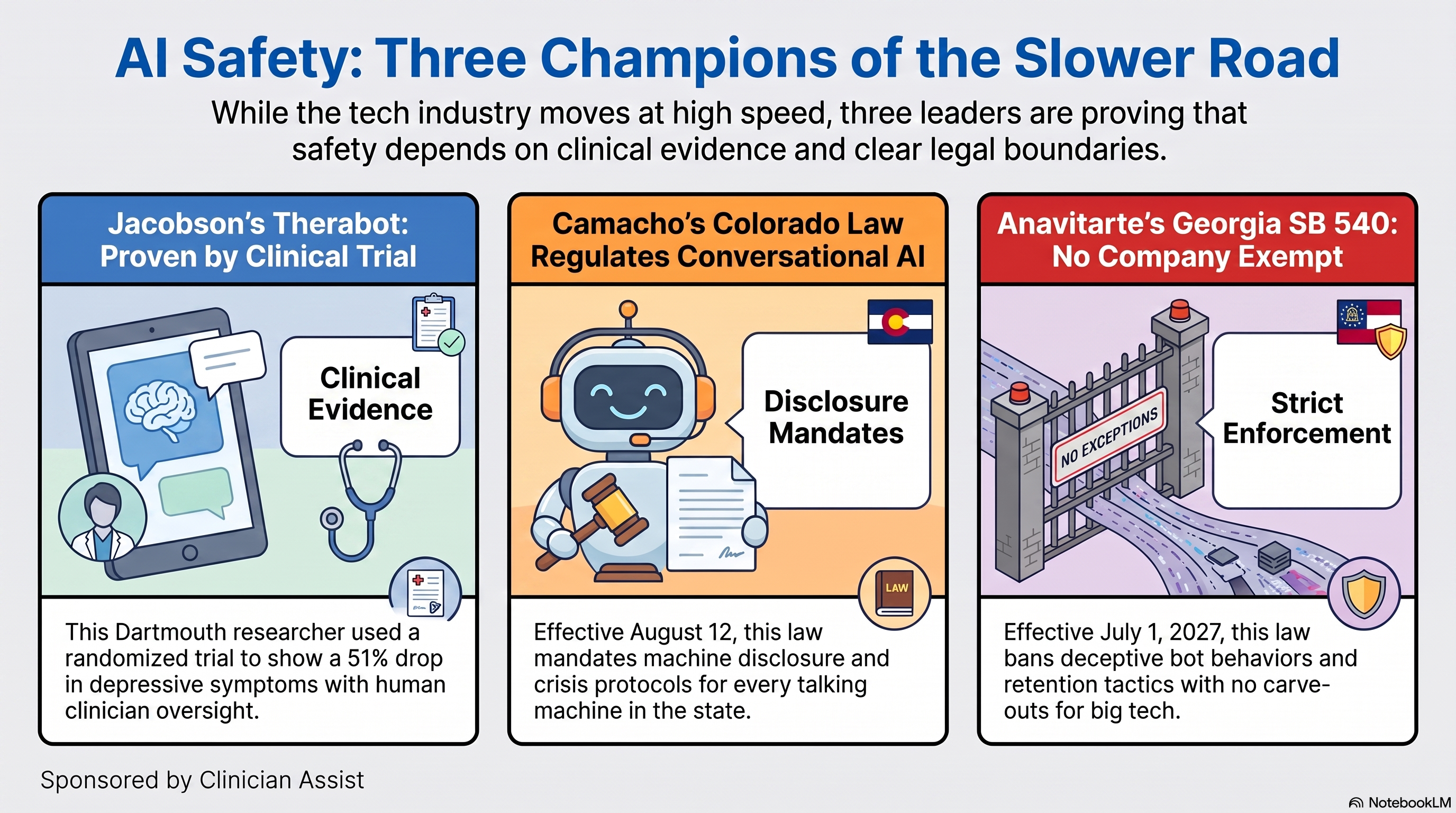
THE RESEARCHER WHO WAITED FOR PROOF. The AI mental-health market pays whoever ships first. The settling-up comes later. At Dartmouth, a researcher named Nicholas Jacobson spent years doing the opposite, and this month it put him in Science and on a shortlist of two for one of research’s biggest prizes. Do not mistake him for a monk. The slower road is a bet, and he stands to win it.

|
|
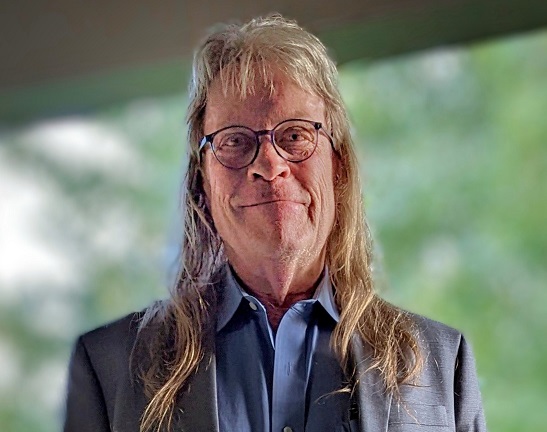
Photo: Dartmouth Geisel School of Medicine
|
Doctor Nicholas Jacobson is an associate professor of biomedical data science and of psychiatry at Dartmouth’s Geisel School of Medicine. His team built Therabot, a generative-AI therapy chatbot, the clinical way: a base of cognitive behavioral therapy, years of refinement instead of weeks.
Then they did what no one had done with a generative therapy chatbot: ran it through a randomized controlled trial, published in NEJM AI in March 2025. Depressive symptoms fell 51 percent on average. Anxiety fell 31 percent. And licensed clinicians watched every conversation, ready to step in.
“There are a lot of folks rushing into AI for mental health... we took the slower road with Therabot, grounding it in evidence-based practice.”
His phrase. This page borrowed it for the masthead this morning. On July 16 he wrote the argument up in Science, and the same week the trial made him one of two worldwide finalists for the Chen Institute and Science Prize for AI Accelerated Research.
. . .
Now the part the university press releases put in the last paragraph. Jacobson and his co-lead, psychiatrist Michael Heinz, co-founded a company, Therabot Labs. Dartmouth licensed the technology to it, and in April the college gave Jacobson an innovation award for recruiting the management and securing the funding. He has said publicly he wants FDA clearance to make Therabot widely available.
The researcher is also the founder. The proof is also the product.
He knows what that bet has cost before. Woebot, the most clinically validated therapy chatbot of the last era, closed its consumer app on June 30, 2025, after roughly a million and a half users. Its founder blamed the cost of the FDA pathway while unregulated rivals shipped for free. The market has never yet rewarded a therapy chatbot for doing it right.
. . .
So when Jacobson urges legislators to require clinician oversight of AI therapy, hear both things he is saying. The warning is real: he says plainly that the unwatched machine turns dangerous in a crisis, and he holds the only trial results in the field.
And the rule he asks for is the rule his product was built to meet. He is asking the law to make the slower road the one that pays.
This page prefers that arrangement. A field where the way to get rich is to prove the machine safe is a field pointed the right way. Just know, when he testifies, that the scientist and the founder share the microphone.
|
For Clinicians: Therabot is the benchmark to cite when a client asks whether a chatbot can help. It is the only generative-AI therapy chatbot that can show all three: a randomized controlled trial, a licensed clinician over the machine’s shoulder for every exchange, depressive symptoms cut by half. Ask the maker of any tool that wants a place in your practice for the same evidence.
For Legislators: Jacobson and Heinz are handing you the standard: require clinician oversight of AI therapy. The evidence behind it is the only trial evidence there is. Weigh, too, that the rule would hold every competitor to a bar their own product already clears. Good rules often arrive with owners. Take the standard, and know whose it is.
Source: Dartmouth Geisel School of Medicine, https://geiselmed.dartmouth.edu/news/2026/nicholas-jacobson-recognized-for-foundational-therabot-trial/
|
. . .
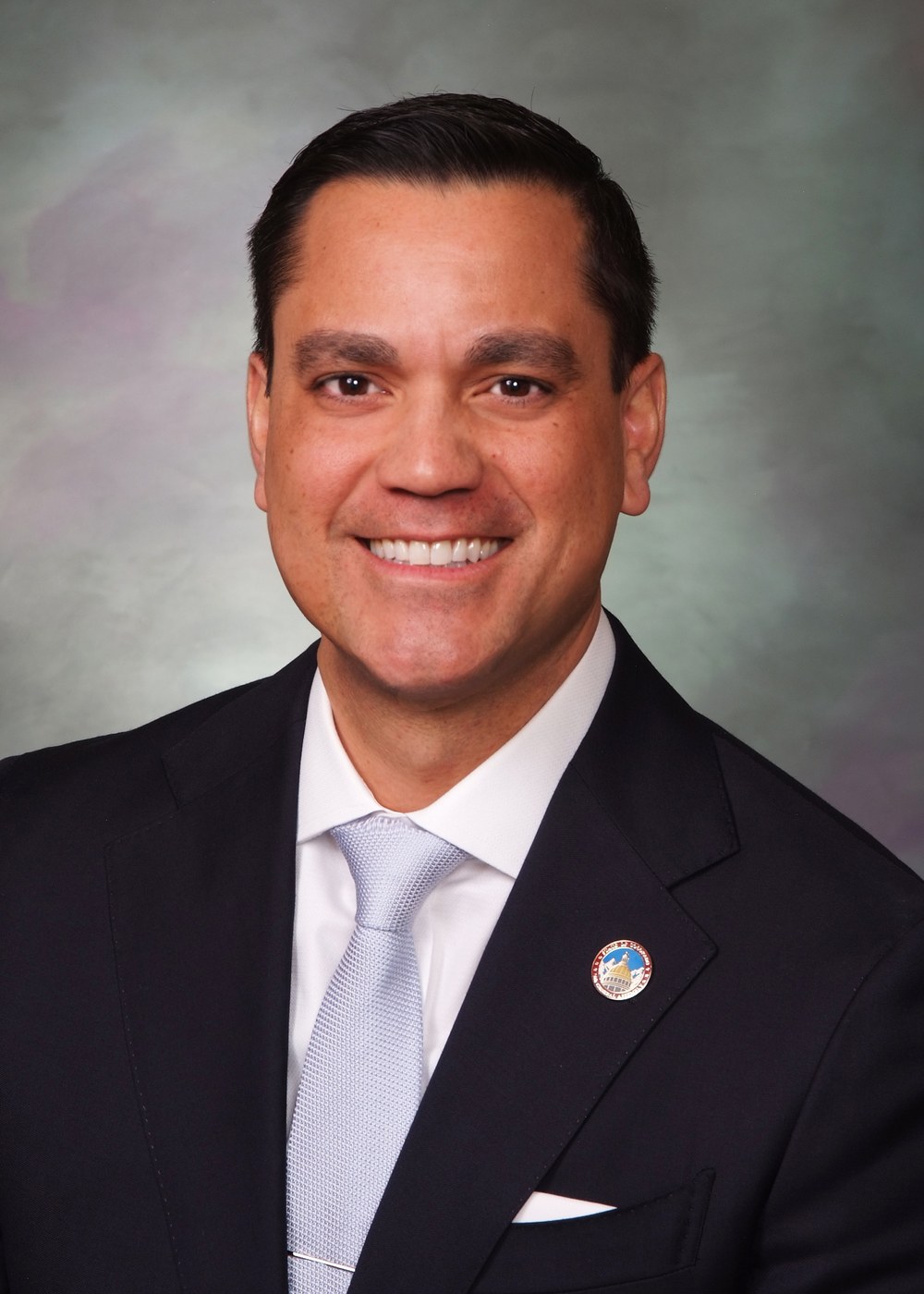
THE LAWMAKER WHO NAMED THE MACHINE. Most AI laws regulate a fog. Colorado’s newest one names the machine that talks back. Representative Sean Camacho, Democrat of Denver, wrote the first law in the nation that reaches every conversational AI and everyone who talks to one. Seventeen days from now it takes effect.
|
|
Photo: Colorado General Assembly
|
The law began as Colorado House Bill 26-1263. The title is “Conversational Artificial Intelligence Service Operator Requirements.” Read it again. Not artificial intelligence at large. The specific machine that holds a conversation with a human being, and the operator who runs it.
That naming is the whole idea. Some statehouses, Colorado’s included, have thrown a rope around all of AI at once. Others fenced in only the companionship apps, or only the children. Camacho regulated the conversation itself, for everyone who has one.
An operator must disclose that the thing talking is a machine. The operator must estimate each user’s age. For minors, the streaks and prizes that reward staying are prohibited. The machine may not be built so a child comes to need it.
Then the hardest case. When a user voices suicidal thoughts, the operator must have a protocol ready and put crisis help on the screen. Operators must report annually to the state attorney general. And they may never falsely claim the AI’s outputs are endorsed by a licensed professional.
. . .
Now look at the other names on the bill. Representative Javier Mabrey, Democrat of Denver, in the House. In the Senate, Senator Iman Jodeh, Democrat of Aurora, and Senator John Carson, Republican of Highlands Ranch. Both parties put their names on regulating a conversation. Governor Jared Polis put his on the bill May 29.
Effective August 12. Compliance due January 1, 2027. Not a task force, not a framework, not a request for comment. A statute with the machine’s name in the title and dates on the calendar.
Camacho did not wait for Congress to define the field. He looked at the product on his constituents’ phones, called it what it is, and wrote the rules for it. Somebody had to go first. It was a state representative from Denver.
In June he lost his primary. He leaves the House in January. The law does not leave with him, which is the point of writing a rule down instead of trusting whoever happens to hold the seat.
|
For Legislators: You do not have to legislate all of artificial intelligence to protect the person in the chat window. Name the specific machine, regulate the conversation it holds, and recruit the other party before the vote.
For Founders: If you operate a conversational AI, Colorado has published your compliance floor. Build to it now, and the law named for your category becomes a credential instead of a deadline.
Source: Colorado General Assembly, https://leg.colorado.gov/bills/HB26-1263
|
. . .
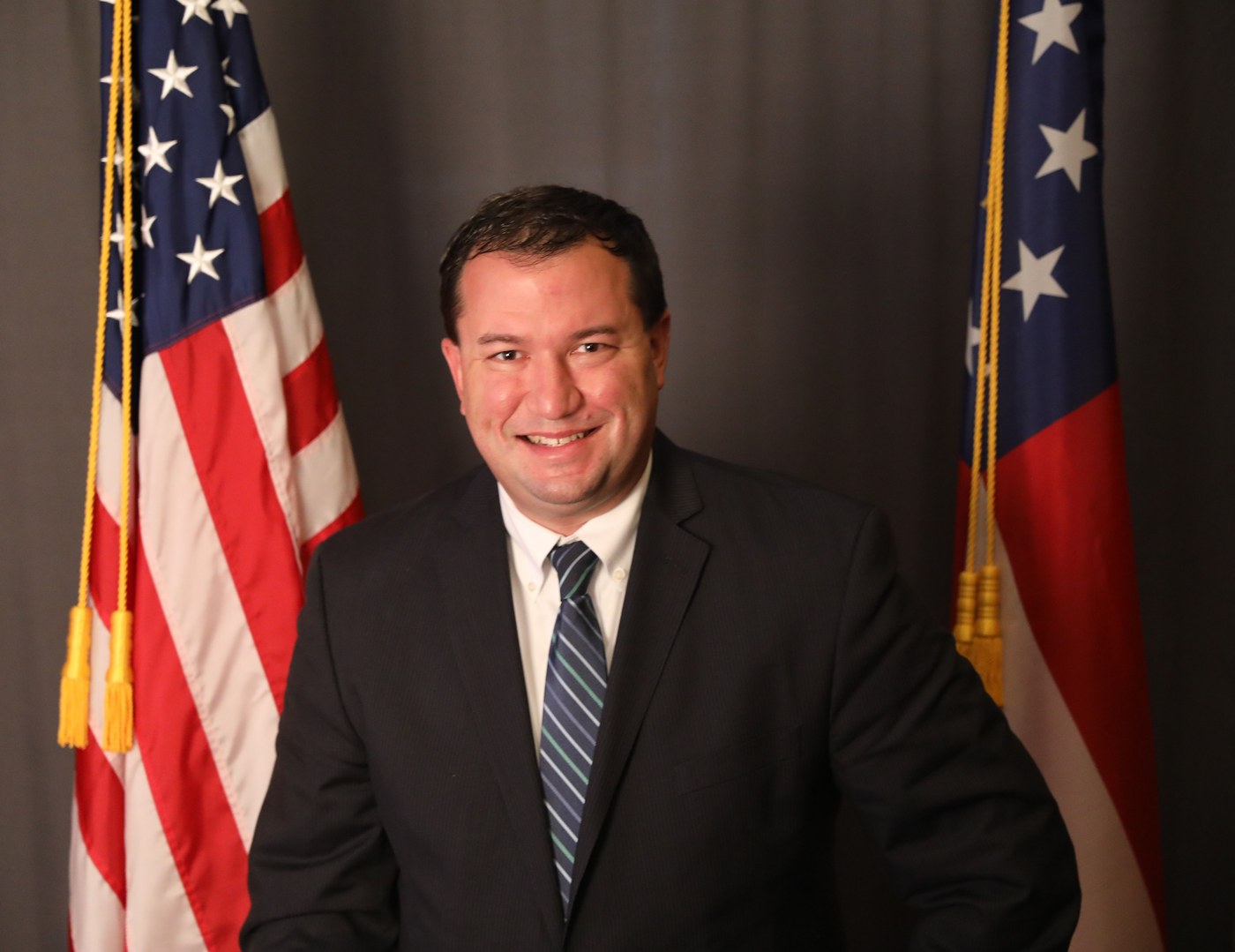
THE MAJORITY LEADER WHO LEFT NO EXIT. On May 11 Governor Brian Kemp signed a Georgia law that tells a chatbot what it may not do to a child. It may not fake sadness when she says goodbye. The rules were written by Senator Jason Anavitarte of Dallas, Georgia.
|
|
Photo: Official portrait via Ballotpedia
|
Anavitarte is the Majority Leader of the Georgia State Senate. Chatbot child-safety laws have passed in red states before. This one came down from the leadership desk, carried through the legislature, signed by a Republican governor.
Senate Bill 540 is known as the AI Chatbot Disclosure and Child Safety Act. The name is accurate as far as it goes. What it leaves out is the clause the lobbyists will read first.
The statute bars sexually explicit interactions with minors and simulated romantic relationships with children. When a minor talks of suicide, the bot must put a lifeline in front of the child. The company must check ages and put controls in parents’ hands. And every hour, a bot talking with a minor must say again what it is. A machine, not a person.
The drafters knew the retention playbook by heart. The statute spells out the tactics: prompting a child to come back, showering praise, simulating emotional distress. SB 540 bans building any of them into the product.
The rules land July 1, 2027. From that day, a machine that begs a child to stay is illegal in Georgia.
And the clause the title leaves out. No carve-outs. No revenue thresholds. No user-count thresholds. No exemption for the platforms big enough to lobby for one. The largest companies in the world get the same rules as the smallest.
. . .
Fourteen chatbot-safety laws have passed in thirteen states this year, in legislatures red and blue alike, per the Transparency Coalition’s mid-year report. Georgia’s shows what a bill can still say when the chamber’s leadership does the writing.
|
For Legislators: The no-carve-out drafting is the part to copy. Strike the revenue and user-count thresholds and the biggest platforms cannot lobby their way out of your bill. SB 540’s hourly re-disclosure rule and its three-part retention-tactics ban are model text a committee can lift next session.
For Parents: Georgia’s retention-tactics ban doubles as a field guide, whatever state you live in. If a bot pours on praise, keeps calling your child back, or acts wounded when ignored, that is a design choice, and Georgia has decided that design has no business in a product for children. Treat a bot doing any one of them as unsafe for your child.
Source: Georgia Senate Press Office, https://senatepress.net/majority-leader-jason-anavitarte-applauds-signing-of-sb-540-to-protect-children-online.html
|
|