|
. . .
PAASCHE-ORLOW’S EMBODIED CONVERSATIONAL AGENT FOR CANCER PATIENTS. A patient in cancer treatment picks up her phone and an animated figure asks, out loud, how her pain has been this week. It makes eye contact, gestures, waits for her answer, in English or in Spanish. That figure is an embodied conversational agent, and Doctor Michael Paasche-Orlow has spent years building the version that reports the answer back to her oncologist.

|
|
Photo: Tufts University
|
Doctor Michael Paasche-Orlow is Vice Chair for Research in the Department of Medicine at Tufts Medical Center and a Professor of Medicine at Tufts University School of Medicine, in Boston. He is a nationally known health literacy researcher, the field that asks a plainer question than most of medicine bothers to ask: can the patient understand and use the information her care depends on.
The grant is titled “Improving PRO Interpretation at the Individual Level for Patients with Cancer using Conversational Agents and Data Visualization.” NIH project number 5R01CA271145-05. Paasche-Orlow is the contact PI at Tufts Medical Center.
His co-PI and technology lead is Timothy W. Bickmore, PhD, of Northeastern University’s College of Computer Science, who has spent over a decade developing embodied conversational agents for patients with limited health literacy, elderly patients, and patients with cancer.
The system they are building is called ECA-PRO. It is a framework for administering patient-reported outcomes, the surveys that ask how a patient is doing, over time, through an embodied conversational agent on the patient’s own smartphone. It runs in English and Spanish.
The agent is not a chat window. It is an animated character that simulates a face-to-face conversation: voice, hand gestures, gaze cues, the nonverbal signals a text box cannot carry.
Bickmore’s group has already shown that these agents work as valid alternatives to paper-based screening surveys, and that an ECA displaying empathy keeps patients engaged over time, where a form on a screen loses them.
Two clinical scenarios anchor this R01. One: longitudinal monitoring of symptoms and quality of life for patients undergoing cancer treatment, tracked visit over visit instead of caught only at the appointment. Two: monitoring medication adherence for patients on long-term oral anti-cancer drugs, the pills taken alone at home with no one watching.
The results come back through new interfaces built to show patients and clinicians clear visualizations, not raw survey data.
The agent asks the questions and reads them aloud to a patient who might otherwise struggle with the form. It does not diagnose, does not prescribe, does not decide. It hands the picture to the oncologist, who does.
|
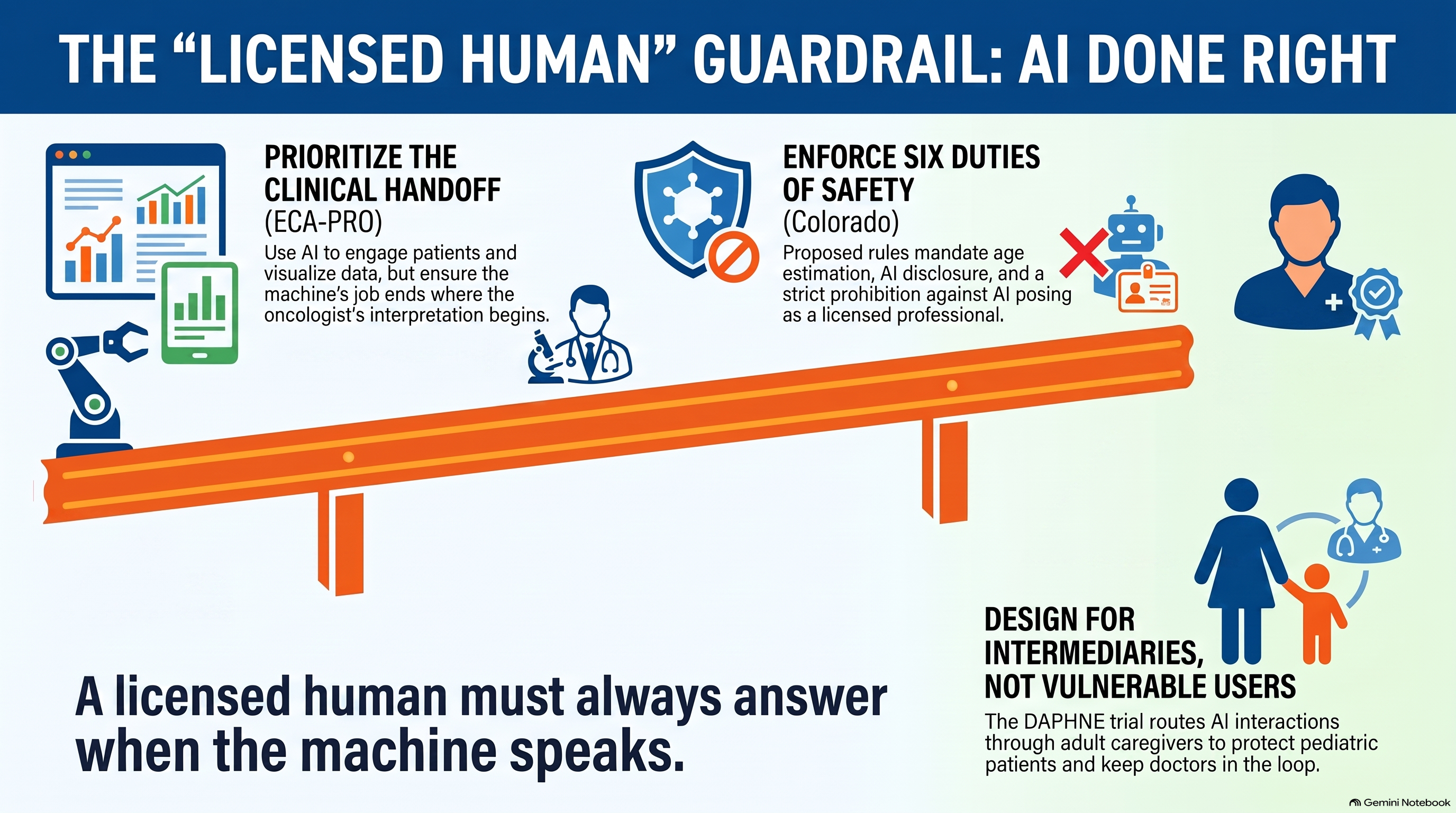
For Clinicians: ECA-PRO is not deployed software; it is an active five-year R01 building the framework, currently in year five of five. What it demonstrates is the design discipline worth demanding elsewhere: the agent’s job ends at collecting and visualizing the patient-reported data, and the oncologist’s job begins at interpreting it. No step in between where the machine decides.
For Legislators: A federal grant is funding, in real time, what a health-literacy-focused conversational agent looks like when it is built for patients who cannot navigate a standard survey: two languages, empathy shown to sustain engagement, and results that terminate in a clinician’s hands, never a diagnosis of their own. That handoff point is the design bar a statute can name.
Source: NIH RePORTER, 5R01CA271145-05, https://reporter.nih.gov/search/5R01CA271145-05/project-details
|
. . .
WEISER’S FIRST DETAILED CHATBOT SAFETY ACT RULES. A teenager in Colorado opens a companion chatbot for company on a slow afternoon. Under a rule the state’s Attorney General just proposed, the app has to guess her age first, then tell her, plainly, that she is talking to a machine.
|
|
Photo: Colorado Attorney General's Office
|
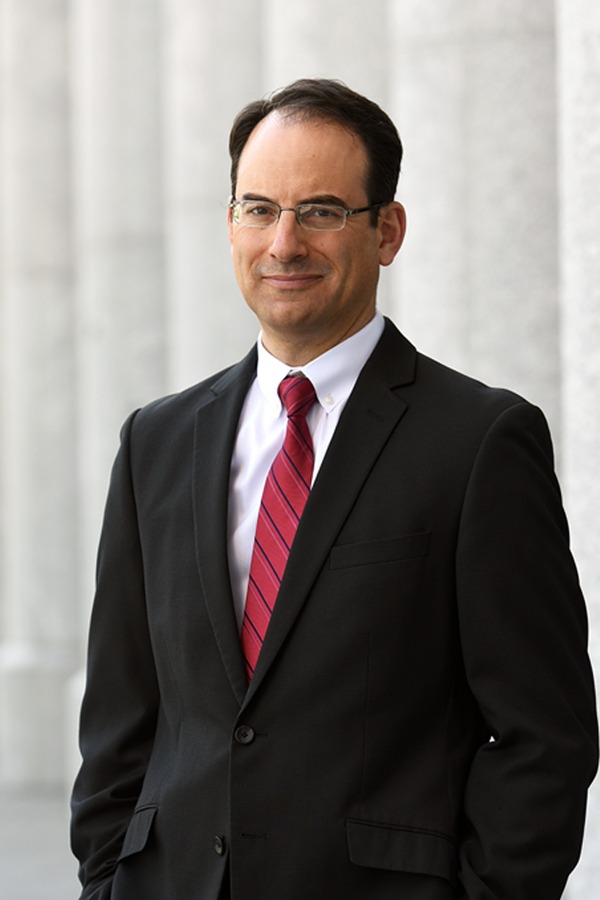
Phil Weiser is the elected Attorney General of Colorado, first elected in 2018 and re-elected in 2022. He was Dean of the University of Colorado Law School before he ran for office, and he is also a candidate for Colorado Governor in the 2026 cycle. That campaign is background here. The story is the rules his office filed, not the race.
On August 11, the Colorado Department of Law, under Weiser’s authority, filed proposed rules for two statutes at once: Senate Bill 26-189, the Automated Decision-Making Technology Act, and House Bill 26-1263, Colorado’s Chatbot Safety Act, formally the Conversational Artificial Intelligence Services Act. Both take effect January 1, 2027. The rules are proposed, not final. They were published for public comment on the same day they were filed.
. . .
Read what the Chatbot Safety Act rules ask of an operator. Estimate the age of the user. Disclose that the user is talking to AI, not a person.
Protect minors specifically against sexually explicit content and against what the rules name directly: simulated emotional dependence. Build privacy and account-management tools sized for a minor user, not an adult’s settings menu. Establish a suicide and self-harm response protocol, not a general safety statement but a protocol.
File an annual report with the Office of the Attorney General, with metrics on how the safeguards and the response protocols performed. And do not let the chatbot’s output be represented as equivalent to a licensed professional service.
Six duties, in a proposed rule, tied to a statute that carries an enforcement office behind it once it takes effect.
. . .
The comment window runs from August 11 to October 26, 2026, at 11:59 p.m. Mountain Standard Time, extended to the last day of the hearing if the hearing itself runs long. A formal rulemaking hearing has been scheduled around that same October date. Nothing in the Chatbot Safety Act rules is locked yet. The record is still open.
The timing carries its own context. Five weeks earlier, on July 7, 2026, the Federal Trade Commission signaled it may move to preempt state chatbot laws, a story Conversational AI Watch covered in issue #134. Weiser’s office filed anyway. Whatever the outcome of that federal question, Colorado put a detailed rule on the table rather than waiting to find out whether it would be allowed to.
The same August 11 filing carries the Automated Decision-Making Technology Act rules alongside the chatbot rules, covering the separate world of AI used in consequential decisions like housing, employment, credit, and insurance: disclosure duties, reporting requirements, and consumer rights for developers and deployers of that technology. It is a second, adjacent proposal riding in the same filing.
|
For Legislators: This is one of the first detailed state regulatory implementations of a chatbot safety statute in the country. Other states have reached for outright bans on companion chatbots for minors or prohibitions on chatbots posing as therapists.
For Operators: The six items are not aspirational. Age estimation. AI disclosure. Protection against sexually explicit content and simulated emotional dependence for minors. Privacy and account tools sized for minors. A suicide and self-harm response protocol. An annual report to the Attorney General with performance metrics.
Source: Colorado Department of Law, AI rulemaking docket, https://coag.gov/ai/
|
. . .
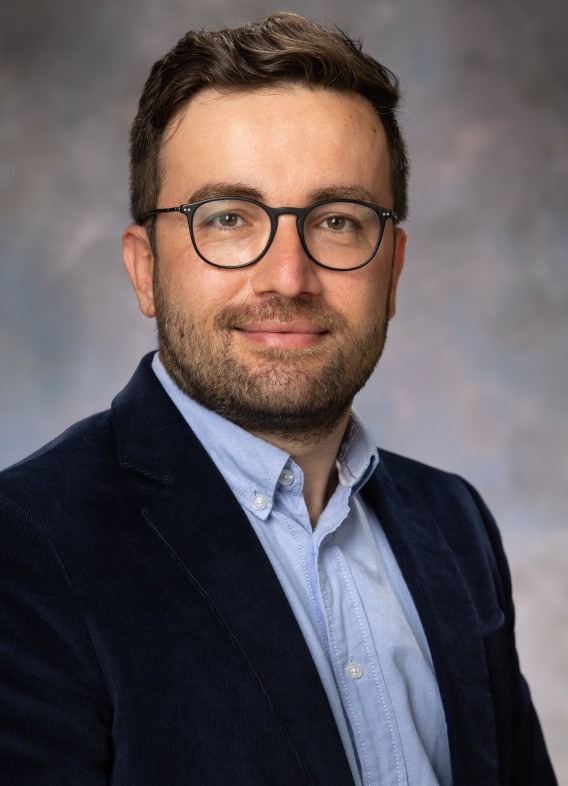
SEZGIN’S DAPHNE CHATBOT FOR PEDIATRIC CAREGIVERS. A caregiver of a pediatric primary-care patient at Nationwide Children’s Hospital opens a chatbot on her phone. Its name is DAPHNE. She is the one it talks to, not her child. What she tells it about usability, burden, and unmet social needs routes back to the child’s own primary care team, never to the child directly.
|
|
Photo: Nationwide Children's Hospital
|
Emre Sezgin, PhD, is Principal Investigator at the Center for Biobehavioral Health at Nationwide Children’s Hospital and Assistant Professor of Pediatrics at The Ohio State University College of Medicine. He leads the Intelligent Futures Research Lab, based in Columbus, Ohio, where his stated focus is building connected digital health tools that improve remote care and promote digital equity for patients and families.
On the DAPHNE trial, Sezgin holds an unusual dual role. He is both the Principal Investigator and the lead sponsor, listed on ClinicalTrials.gov as Emre Sezgin, not as a corporate entity or the hospital itself. That means personal responsibility for the trial’s conduct sits with the researcher, not behind an institutional or commercial sponsor.
DAPHNE is a pilot randomized clinical trial. Its subjects are caregivers of pediatric patients at the Nationwide Children’s Hospital Primary Care Center, not the children themselves. Enrolled caregivers are split between a DAPHNE intervention arm and a standard-of-care control arm over a six-month engagement window. Caregivers complete usability and burden surveys plus brief qualitative interviews. Primary care providers, separately, assess how the chatbot’s outputs fit their own workflow.
The trial asks two questions: is DAPHNE usable, acceptable, and low-burden for caregivers over six months, and can it be integrated into a primary care provider’s workflow without friction.
The outcome measures are the System Usability Scale, the Web Evaluation Questionnaire, the Feasibility of Intervention Measure, retention rate, and social determinants of health. The trial began recruiting April 24, 2026, with primary completion projected for August 2028. No outcome data exists yet.
The architectural choice is the news. DAPHNE does not speak to the child in the exam chair. It speaks to the adult who holds legal and practical responsibility for that child, and it hands what it learns, particularly unmet social-care needs, to the licensed pediatric primary care team. The vulnerable person in this design is never the one talking to the machine.
|
For Clinicians: The pediatric primary care team stays in the loop by design, not by policy overlay. DAPHNE is a pilot with a six-month engagement arm and no outcome data yet; the trial itself, not a vendor claim, is what will tell you whether it works.
For Legislators: Statutory language about “AI in pediatric settings” tends to assume the AI is talking to the pediatric patient. DAPHNE is a working counterexample: a chatbot built to serve a pediatric patient population entirely through the adult caregiver, with outputs routed to a licensed clinician.
Source: ClinicalTrials.gov, “AI-Based Personalized Health and Self-Care,” NCT07168382, https://clinicaltrials.gov/study/NCT07168382; Nationwide Children’s Hospital, Emre Sezgin profile, https://www.nationwidechildrens.org/find-a-doctor/profiles/emre-sezgin
|
|