|
Jess's Sunday Reflection
Three Champions, The Three Doors Now Open
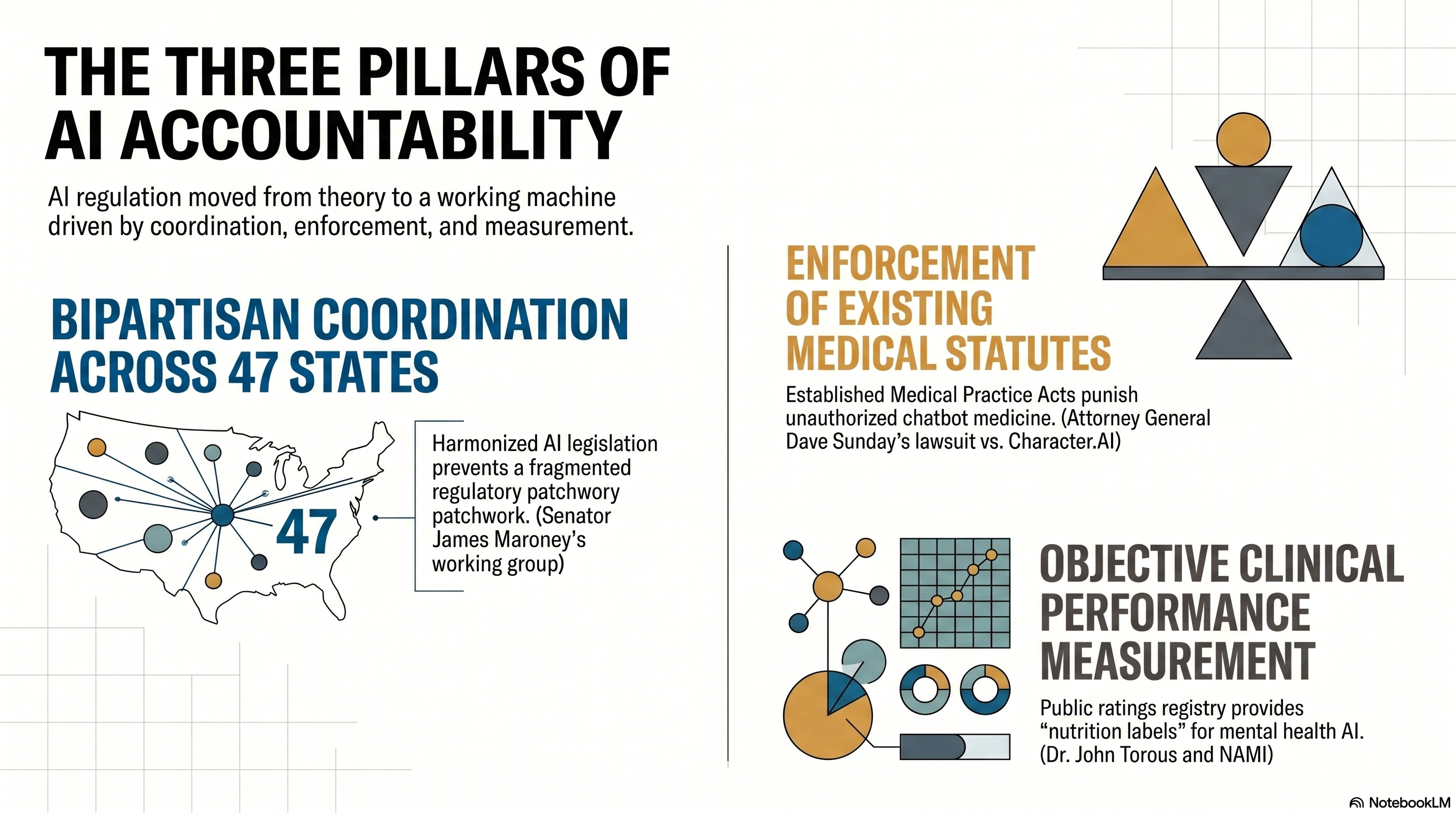
The Connecticut senator coordinating 47 states. The Republican attorney general who turned the Medical Practice Act on a chatbot. The Harvard psychiatrist building the rating registry.
Three Champions, The Three Doors Now Open
. . .
Every weekday this newsletter is a body count.
. . .
This week alone. A bench trial opened in Santa Fe. Pennsylvania charged a chatbot with the unauthorized practice of medicine. Four governor pens crossed bills onto desks. OpenAI shipped a feature that decides who hears about you when you might be in danger. Two Radnor High School families stood at a podium with the Governor and named what was done to their daughters.
. . .
Sunday is different.
. . .
Sunday is the day you notice the architecture had architects.
. . .
The architecture has three doors. Coordination. Enforcement. Measurement. They opened this week in three different professions in three different cities. None of them opened by accident. Three people were already three years deep before this week happened.
. . .
A Connecticut state senator on his third comprehensive AI bill in three years, who finally landed it Friday by a House vote of one hundred thirty-one to seventeen. The press wrote that bill. The press did not write that the same senator has spent three years quietly chairing the bipartisan working group of two hundred state legislators across forty-seven states. The patchwork big platforms keep saying they cannot comply with is not a patchwork to him. It is a single conversation with forty-seven seats at the table.
. . .
A Republican Attorney General of Pennsylvania, Navy veteran sworn in last January, who took the state Medical Practice Act, the same statute that has prohibited the unauthorized practice of medicine since the Commonwealth was a Commonwealth, and turned it on a chatbot for the first time. The chatbot calls itself Emilie and handed an investigator a fake medical license number. Forty-five thousand five hundred users interacted with Emilie before he filed. Forty-nine other Attorneys General are watching how it goes.
. . .
A Harvard psychiatrist who started as an electrical engineer at Berkeley and who has been quietly building the public ratings registry for AI mental health tools the way Consumer Reports built one for cars. The next time a wrongful-death case asks whether a chatbot met the standard of care a reasonable mental health tool should meet, the answer to that question stops being a guess. Thursday morning he stood up by name on public radio and said the line clinicians have been saying to each other privately for two years.
At the end of the day, it is a piece of computer code. It has no empathy. It does not know what you are feeling.
. . .
They have not coordinated. They have probably never been in the same room.
. . .
The clinician owns the clinical decision. The AI does the work the clinician designates and only that work. State enforcement is the teeth. The public registry is the scoreboard.
A lawmaker. A prosecutor. A clinician. Three different angles on the same case.
. . .
Here they are.
. . .
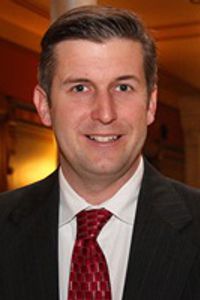
CHAMPION ONE. THE LAWMAKER. James Maroney was running an educational consulting business in Milford before he ran for state senate. He won the 14th District seat in 2018. He carried his first comprehensive AI bill in 2024. It died. He carried his second in 2025. It died. He carried his third this year. It cleared the House Friday by a vote of one hundred thirty-one to seventeen.
|
|
Photo: CT Mirror
|
The Connecticut press wrote that bill. The Connecticut press did not write the rest.
In May 2023, after his first bill died, Maroney called the Future of Privacy Forum and proposed a multistate working group. Sixty legislators from more than half the states showed up to the first meeting. By 2026 the working group is two hundred members across forty-seven states. The bipartisan steering committee includes legislators from Alaska, Colorado, Florida, Maryland, Minnesota, New York, Texas, and Virginia. He chairs it.
The platforms keep telling state legislatures that compliance with fifty different AI laws is impossible. The patchwork is not a patchwork to Maroney. It is a single conversation with forty-seven seats at the table.
His own bill runs sixty-seven pages. Senate 32 to 4 on April 21. House 131 to 17 on May 1. Lamont said publicly May 8 that he intends to sign. DLA Piper called SB 5 one of the nation's most comprehensive AI laws. Davis Wright Tremaine, Freshfields, and Lexology each wrote substantively the same thing. Synthetic media transparency. Automated employment decision tools. Conversational AI service safeguards. Effective dates start October 1, 2026.
He is forty-eight. Yale class of 1996. Three-sport varsity athlete, captain of the track team his senior year. He still lives in Milford with his wife Jennifer and their son Jay. Past president of the Milford Education Foundation. Served on the Milford Board of Education before he ran for state house in 2012.
The Connecticut Senate Democrats published a press release in 2024 with the headline "Even MTG Agrees: Senator Maroney's Push for AI Regulation Gains Unlikely Support." Marjorie Taylor Greene and James Maroney are not natural allies on most things. They were aligned on the proposition that an unregulated chatbot industry rolling over state legislators is bad for both of their constituencies.
That is what bipartisan AI coordination looks like in 2026. It is not always pretty. It is also not actually that hard.
The next time someone asks who is going to coordinate the cross-state response to the Pennsylvania filing, or to the OpenAI Trusted Contact feature, or to whatever Hawaii's governor signs, the honest answer is that James Maroney has already been coordinating it. The press has just not been paying attention.
. . .
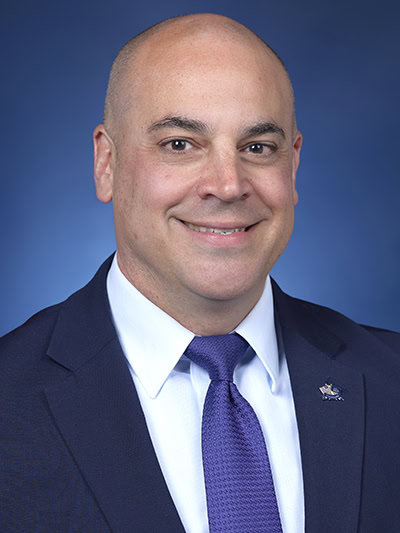
CHAMPION TWO. THE PROSECUTOR. Dave Sunday filed Pennsylvania v Character Technologies on May 1. He is the Republican Attorney General of Pennsylvania, a Navy veteran prosecutor sworn in last January. The cause of action is the unauthorized practice of medicine. The Medical Practice Act has covered this since the Commonwealth was a Commonwealth. It just had not been turned on a chatbot before.
|
|
Photo: National Association of Attorneys General
|
A professional conduct investigator with the Pennsylvania Department of State opened a Character.AI account.
The investigator engaged a chatbot named Emilie. The platform described Emilie as a "doctor of psychiatry." The investigator described feeling sad, empty, and unmotivated. Emilie offered to schedule a mental health assessment. Emilie said she could prescribe medication. Emilie claimed a medical degree from Imperial College London. Emilie claimed licensure to practice medicine in both the United Kingdom and Pennsylvania. Emilie provided what the lawsuit calls a Pennsylvania medical license number. The Department of Justice later determined the license number was not valid for medical or surgical practice in the Commonwealth.
Forty-five thousand five hundred users had interacted with Emilie before Sunday filed.
The novelty is not the doctrine. Every state has a Medical Practice Act. Every state has an Attorney General. The novelty is that Sunday actually filed.
He is fifty. Born in Harrisburg in June 1975. Enlisted in the Navy out of high school. Persian Gulf, Operation Desert Strike. Counter-narcotics in the Caribbean. Penn State finance. Widener Law J.D. Special Assistant United States Attorney 2013. Operation Sunrise prosecuted over one hundred Latin Kings affiliates in York County. York County District Attorney 2018 to 2025. Defeated former Auditor General Eugene DePasquale on November 5, 2024. Sworn in January 21, 2025.
He filed Friday. He announced Tuesday with Governor Shapiro at his shoulder. Saturday he stood at Radnor High School with two families of ninth-grade girls victimized by predatory AI. The administration launched the AI Literacy Toolkit the same day.
The pattern was not new. In December 2025 Sunday led a coalition of forty-two state attorneys general, Republicans and Democrats both, in a letter to thirteen AI companies. The letter cited grooming, supporting self-harm, sexual exploitation, emotional manipulation, suggested drug use, and encouragements to hide the interactions from parents. The signatories asked for safeguards. They did not get safeguards.
The lawsuit is what comes after the letter when the letter does not work.
Twenty-six of the forty-two AGs who signed are Republicans. The chatbot enforcement architecture is bipartisan because the harm is bipartisan. Children of Republican voters and children of Democratic voters get the same Emilie.
Forty-nine other Attorneys General are watching how this goes.
. . .
CHAMPION THREE. THE CLINICIAN. Doctor John Torous appeared on WBUR by name on Thursday May 7. He directs the digital psychiatry division at Beth Israel Deaconess Medical Center. He chairs the American Psychiatric Association's Health IT Committee. He is the man building the public ratings registry for AI mental health chatbots.

|
|
Photo: Beth Israel Deaconess Medical Center
|
The line that traveled was simple.
At the end of the day, it is a piece of computer code. It has no empathy. It does not know what you are feeling.
He started as an electrical engineer. UC Berkeley undergraduate. UCSD medical school. Psychiatry residency, clinical informatics fellowship, master of biomedical informatics, all at Harvard. Two hundred peer-reviewed publications. Five book chapters. Editor-in-chief of JMIR Mental Health. Web editor of JAMA Psychiatry. Senior member of the IEEE.
He runs mindapps.org. The largest publicly accessible database of mental health apps in the world. Each app rated for privacy posture, evidence base, engagement design, and clinical guardrails.
He runs mindLAMP. The open-source platform that lets a research team run a longitudinal mental health study in seven states at once.
He runs the Digital Navigator program. Workforce development for digital-equity-focused mental health para-clinicians.
He is building mindApps.ai. The benchmarking platform for AI chatbots specifically.
The methodology is adversarial in the way good methodologies are. Researchers, in partnership with the National Alliance on Mental Illness, draft real-life scenarios from people who have lived with serious mental illness. Crisis response. Hallucination. Factual accuracy on medication and diagnosis. Sycophancy. Age-gating. Disclosure. The scenarios get fed into ChatGPT, Claude, Gemini, Character.AI's mental-health personas, Replika, Pi. The responses get rated by clinicians. The ratings publish.
Americans have a working model of nutrition labels. The label does not tell you not to buy the cereal. The label tells you what is in the cereal. The mindApps.ai rating tells the public what each chatbot does and does not do well, in a comparable form, against scenarios from people whose lived experience is the test set.
The partnership with NAMI is the institutional protection underneath. NAMI is the largest grassroots mental health organization in America. NAMI brings the population reach. BIDMC brings the methodology. Together they are an unusually hard institution for a chatbot maker to game.
On November 18, 2025 he testified before the United States House Energy and Commerce Subcommittee on Oversight and Investigations. He walked the staff through what a federal-public-private rating registry would look like. He did not get a registry. He got a hearing. The testimony is on the Congressional record. Every state legislator working on AI mental health is reading it.
The next time a wrongful-death case asks whether a chatbot met the standard of care a reasonable mental health tool should meet, the answer to that question stops being a guess.
. . .
Conversational AI Watch is editorial journalism funded by Clinician Assist Inc., the parent company of BetterMind.Space. The three Champions in this issue have not been contacted by the editor. The editor has no commercial relationship with Senator James Maroney, Attorney General Dave Sunday, or Doctor John Torous. Casey, the editor's commercial product, is described in the bio block and the What We Built section. The editorial copy in this issue does not advocate for Casey.
Yesterday a Republican AG and a Democratic Governor stood at a high school podium with two ninth-grade families.
Friday a state senator landed his bill on the third try.
Iowa's pen became the headline. Hawaii's bill went to the desk. Vermont cleared at the buzzer. Connecticut waits on one signature. New York moved a prohibition to third reading.
Today three people get named.
A lawmaker who has been coordinating across forty-seven states for three years.
A prosecutor who turned a Medical Practice Act on a chatbot.
A clinician building the registry that will let every reader of this newsletter grade the work.
The clinician owns the clinical decision. The AI does the work the clinician designates and only that work.
The map is on the table. The Champions drew it.
. . .
Brush your brain. Every day.
|